In-Ground Pools: Types, Costs, and Installation Guide
Last updated 2026-07-30
If you are thinking about putting an in-ground pool in your backyard, you probably have three questions: what type should I get, how much will it cost, and what does the process look like from start to finish. Those are the right questions. Here are the answers — with real numbers, no sales pitch.
What Are the Different Types of In-Ground Pools
There are three types of in-ground pools. Each works. Each has tradeoffs that matter differently depending on your budget, how much maintenance you are willing to handle, and what you want the finished pool to look like.
Concrete (Gunite) Pools
Concrete pools are built on-site by spraying gunite or shotcrete over a steel rebar framework. They are the most customizable option. You can build a concrete pool in any shape, any depth, any size. Want a lap pool that is 60 feet long? Concrete. Want a freeform lagoon with a beach entry? Concrete.
Concrete pools typically cost $45,000 to $100,000 or more. They take 8 to 12 weeks to build from excavation to first swim. The plaster surface needs to be resurfaced every 12 to 15 years, which costs $4,000 to $8,000. Many homeowners upgrade to a PebbleTec or quartz finish, which is smoother and lasts 15 to 20 years, but adds $3,000 to $5,000 to the project.
Fiberglass Pools
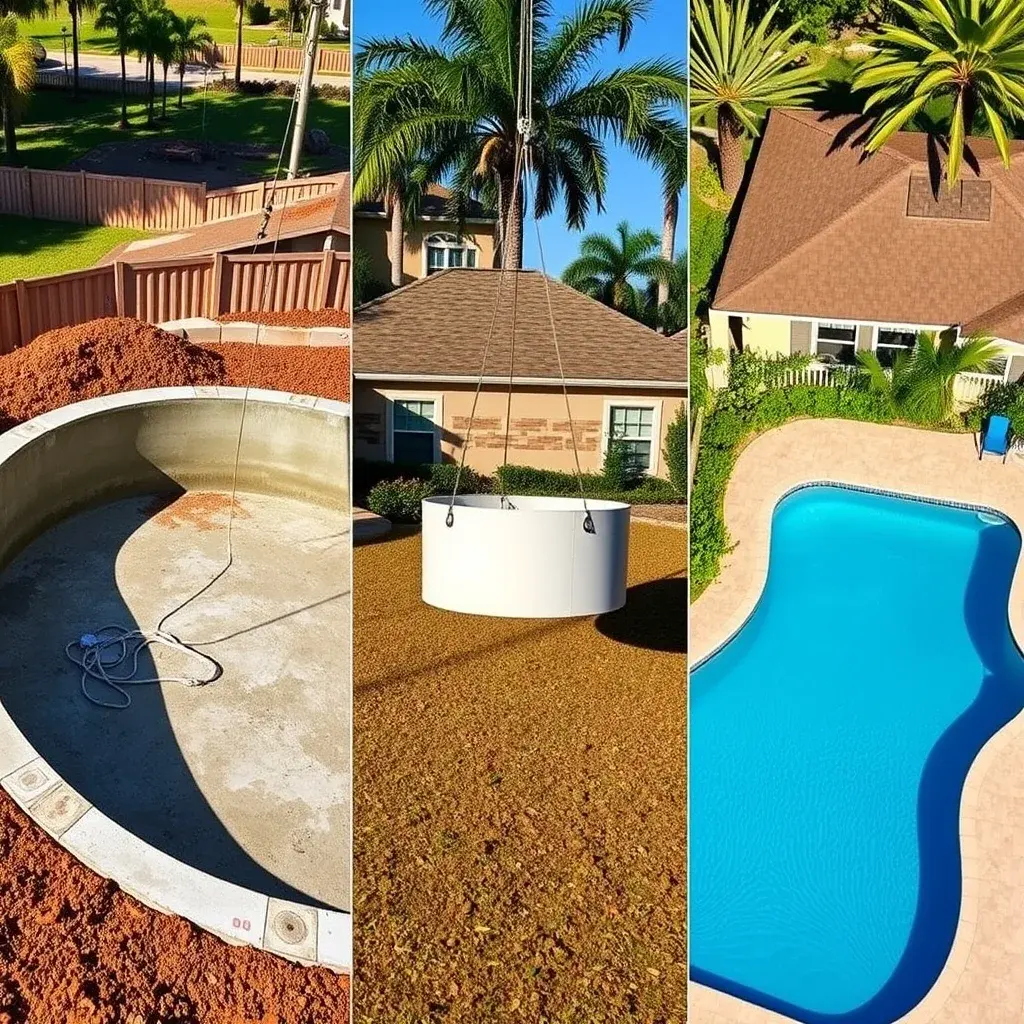
Fiberglass pools arrive as a single pre-formed shell that a crane lowers into the excavated hole. They come in predetermined shapes and sizes from manufacturers like Thursday Pools, Latham, and San Juan. You cannot customize the shape, but the selection has improved significantly — most manufacturers now offer beach entry, baja shelf, and deep-end options.
Fiberglass pools typically cost $30,000 to $60,000. Installation takes 2 to 4 weeks — much faster than concrete. The gelcoat surface never needs resurfacing and is naturally smooth. Fiberglass is also non-porous, meaning algae has a harder time taking hold. This translates to lower chemical costs and less maintenance time over the life of the pool.
The limiting factor: the shell must be trucked to your property. If your backyard has narrow access, steep terrain, or overhead power lines, a crane may not be able to position the shell. An experienced installer will do a site survey before quoting — measuring access widths, overhead clearance, and crane positioning — so you know whether fiberglass is viable before you commit to anything.
Vinyl Liner Pools
Vinyl liner pools use a flexible PVC liner stretched over a frame structure made of steel, polymer, or concrete block. They are the most affordable in-ground option upfront. The liner itself costs $2,500 to $4,500 and needs replacement every 8 to 12 years.
Vinyl liner pools typically cost $25,000 to $50,000. The smooth surface is comfortable underfoot — no scraped knees for kids or grandkids. But the liner is vulnerable to punctures from sharp objects, pet claws, and pool toys. In sunny climates, the liner can fade faster than it would in northern regions.
How Much Does an In-Ground Pool Cost
An in-ground pool costs $25,000 to $100,000+ depending on type — concrete runs $45,000–$100,000+, fiberglass costs $30,000–$60,000, and vinyl liner is the most affordable at $25,000–$50,000. Permits, decking, and equipment add $8,500–$30,000+ to the base pool price.
The total project cost includes more than the pool shell. Here is a breakdown of what you are paying for at each stage.
| Item | Concrete (Gunite) | Fiberglass | Vinyl Liner |
|---|---|---|---|
| Pool shell and installation | $45,000–$100,000+ | $30,000–$60,000 | $25,000–$50,000 |
| Permit and engineering fees | $1,000–$3,000 | $1,000–$3,000 | $1,000–$3,000 |
| Deck/patio (400 sq ft) | $4,000–$12,000 | $4,000–$12,000 | $4,000–$12,000 |
| Screen enclosure (where required) | $5,000–$15,000 | $5,000–$15,000 | $5,000–$15,000 |
| Equipment (pump, filter, heater) | $3,500–$7,000 | $3,500–$7,000 | $3,500–$7,000 |
| Annual maintenance | $1,800–$3,000 | $1,200–$2,400 | $1,500–$2,700 |
| Lifespan before major work | 15–25 years | 25+ years | 8–12 years (liner) |
These are national averages. Your actual cost depends on pool size, lot access, local labor rates, and the contractor you choose. Getting three quotes typically reveals a $10,000 to $15,000 spread for the same pool design.
What to Know Before Building an In-Ground Pool
Permits and Approvals
Every municipality requires a building permit for an in-ground pool. The permit process covers zoning setbacks, structural engineering, electrical bonding, and plumbing. Plan for 4 to 8 weeks of review time before your contractor can break ground. A good contractor handles the entire permit package — drawings, engineering stamps, and application filing — so you are not stuck deciphering municipal code language on your own.
If you live in a community with a homeowners association (HOA) or community development district (CDD), you will also need architectural review. The HOA typically cares about pool placement, deck colors, enclosure design, and equipment screening. An experienced local contractor knows which deck colors and enclosure styles get approved on the first submission and which ones trigger revision requests. Confirm they handle this before you sign.
Building Codes and Safety Requirements
Most states follow the International Swimming Pool and Spa Code (ISPSC), which covers structural integrity, electrical safety, and barrier requirements. Key rules that apply in virtually every jurisdiction:
- A safety barrier (fence or approved enclosure) at least 48 inches high
- Self-closing and self-latching gates that open outward, away from the pool
- Anti-entrapment drain covers compliant with the Virginia Graeme Baker Act
- GFCI-protected electrical circuits for all pool equipment
- Equipment anchors rated for local wind-load requirements
In coastal and high-wind regions, additional structural requirements apply. Your contractor should know which code edition your city enforces — if they cannot tell you during the estimate visit, that is a red flag. A contractor worth hiring walks you through the permit and code requirements before you commit, not after.
The Installation Process From Dig to First Swim
Concrete pools: Excavation (1–2 days) → steel rebar framework → plumbing rough-in → gunite application (cures 7 days) → tile, coping, and deck → plaster finish → fill and balance water. Total: 8 to 12 weeks.
Fiberglass pools: Excavation → gravel base → shell lowered by crane → plumbing connections (1–2 days) → backfill and deck work (1–2 weeks). Total: 2 to 4 weeks.
Vinyl liner pools: Excavation → wall panels erected → liner installed → plumbing connections → deck work. Total: 4 to 8 weeks.
In warm climates, avoid the rainy season — wet soil slows excavation and can delay concrete curing. In colder climates, build spring through early fall.
Which In-Ground Pool Type Is Best for You
If You Want Low Maintenance
Fiberglass pools require the least ongoing work. The non-porous gelcoat surface resists algae growth, so you spend less on chemicals and less time brushing the walls. No resurfacing. No liner replacement. If you want to swim, not scrub, fiberglass is the practical choice.
Concrete pools with a PebbleTec or quartz finish are the second-best option for low maintenance. The upgraded surface is smoother than standard plaster and lasts 15 to 20 years before needing resurfacing. The tradeoff is the upfront cost — concrete with an upgraded finish runs higher than standard plaster.
Vinyl liner pools require the most periodic attention. The liner needs replacement every 8 to 12 years, which costs roughly the same as a concrete resurfacing job. In between replacements, the liner needs careful treatment — no sharp objects, no pet claws, no abrasive cleaning tools.
If You Want a Custom Shape
Concrete is the only option for truly custom pool shapes. Lap pools, geometric designs with sharp angles, infinity edges, and complex freeform shapes all require gunite or shotcrete construction. Fiberglass pools are limited to the manufacturer's mold library, and vinyl liner pools are constrained by the frame structure that holds the liner.
Safety and Accessibility Features
Beach entry (also called zero-entry) eliminates stairs entirely. You walk into the pool on a gradual slope, like walking into the ocean. This is the single best design feature for anyone with knee, hip, or mobility concerns. Beach entries work with concrete pools and some fiberglass models.
A baja shelf — a wide, shallow platform just below the water surface — gives you a place to sit in the water without swimming. It is essentially a built-in lounge chair. Great for cooling off on hot afternoons without needing to swim laps.
Non-slip coping around the pool edge prevents falls on wet surfaces. Travertine and textured concrete are excellent choices for grip. Avoid smooth polished stone — it gets dangerously slippery when wet.
Frequently Asked Questions About In-Ground Pools
How much does an in-ground pool cost?
An in-ground pool costs $25,000 to $100,000 or more depending on type, size, and location. A basic vinyl liner pool starts around $25,000. A mid-sized fiberglass pool runs $35,000 to $55,000. A custom concrete pool runs $45,000 to $100,000+. These prices include standard equipment but may not cover the deck, enclosure, or landscaping. The cost table above breaks down every line item.
What is the best type of in-ground pool?
There is no single "best" type — it depends on what you prioritize. Fiberglass wins on low maintenance and fast installation. Concrete wins on custom shapes and maximum durability. Vinyl liner wins on lowest upfront cost. All three can produce a beautiful, functional pool when installed by a qualified contractor. The right choice is the one that matches your budget, your timeline, and how much maintenance you are willing to do.
How long does it take to build an in-ground pool?
Concrete pools take 8 to 12 weeks of construction. Fiberglass pools take 2 to 4 weeks. Vinyl liner pools take 4 to 8 weeks. Permit review adds 4 to 8 weeks before construction can begin. Most homeowners budget 3 to 5 months total from signing a contract to their first swim.
What maintenance does an in-ground pool need?
Weekly: chemical testing and adjustment, skimming surface debris, emptying skimmer and pump baskets. Bi-weekly: brushing walls and tile line. Monthly: backwashing or cleaning the filter. Professional service costs $80 to $150 per month on average. Fiberglass pools need less chemical adjustment than concrete pools because the smooth non-porous surface does not affect water chemistry the way rough plaster does.
Does a pool increase home value?
A well-built in-ground pool typically adds 50 to 80 percent of its installation cost to your home's resale value. More importantly, homes with pools tend to sell faster in warm climates and family-oriented neighborhoods. In markets where pools are common, not having one can be a drawback when you list.
What should I look for in a pool contractor?
Look for a contractor who is licensed, insured, and has built pools in your area for at least five years. Ask to see recent projects — not photos, but pools you can visit or speak to the homeowners about. Get three written quotes with line-item breakdowns, not just a final number. Check your state's contractor licensing board for complaints or disciplinary actions. The lowest bid is rarely the best value.
In-Ground Pool Installation in Your Area
Ready to break ground? Our partnered pool contractors handle permitting and execution across Central and Western Florida. Explore local pricing and contractor availability for your city:
- The Villages: In-ground pool installation in The Villages
- Central Florida: Clermont pool installation · Gainesville pool builders
- Tampa Bay Coast: Clearwater pool installation · Largo pool installation
Compare pool types: Above-ground pools · Semi-in-ground pools
Ready to Get a Custom Quote for Your In-Ground Pool?
We connect you with up to three licensed, insured pool contractors in your area who can build exactly what you want. Free estimates, no obligation. Call (352) 555-0194 or visit our pool installation services page to get started.
Related reading: Concrete Pools · Fiberglass Pools · Vinyl Liner Pools · Pool Designs for Your Home · Pool Installation Services