Lap Pools: Design, Dimensions, Cost, and Installation Guide
Last updated 2026-07-30
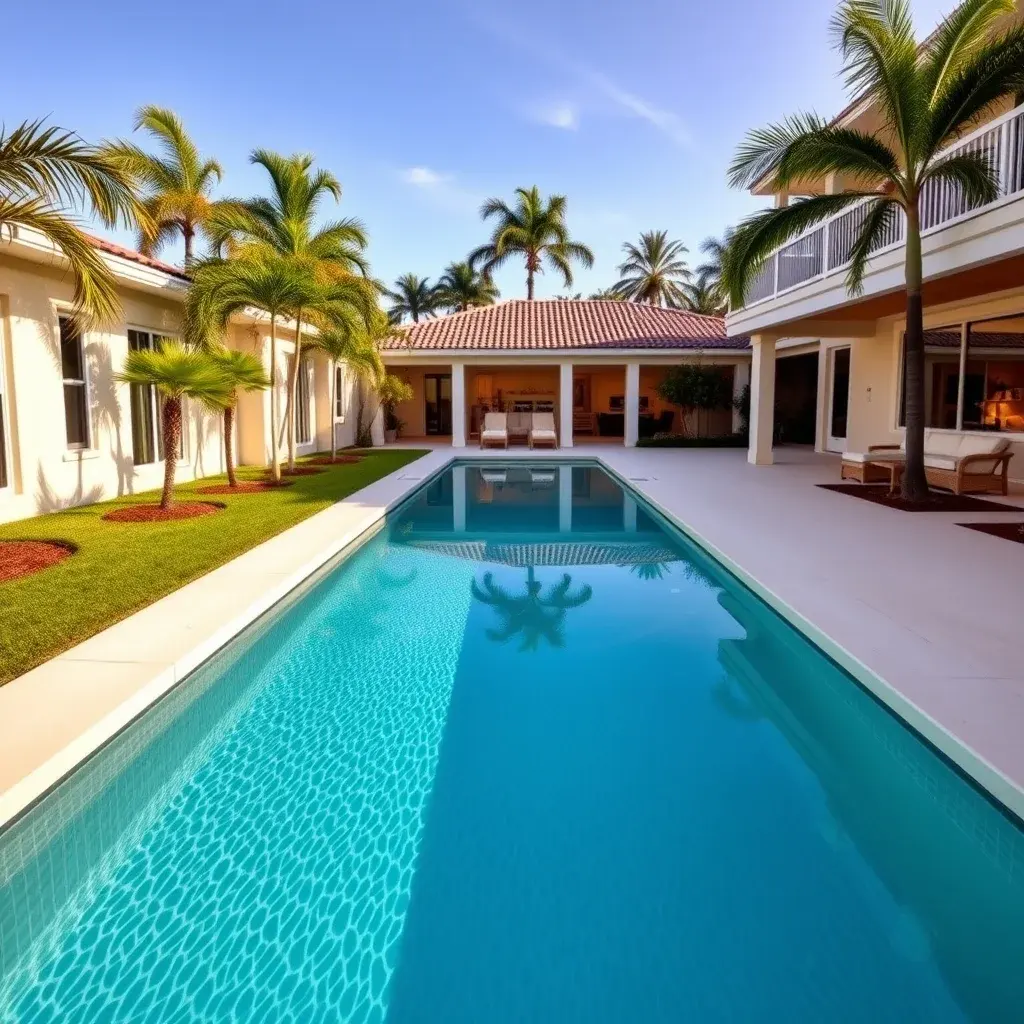
A lap pool is built for one purpose: swimming. It is long, narrow, and rectangular — typically 40 to 75 feet long and 8 to 10 feet wide — with a uniform depth of 4 to 5 feet from end to end. There are no curves, no shallow lounging areas, and no rock waterfalls. A lap pool is the swimming equivalent of a home gym: functional, focused, and designed for daily use. Here is what you need to know about dimensions, costs, and what it takes to build one that actually works for exercise.
Lap Pool Dimensions: How Long Is Long Enough
The standard competitive lap pool is 25 yards (75 feet) or 25 meters (82 feet). Most residential lap pools are 40 to 60 feet long — enough for a continuous swim without excessive turning. The minimum viable length for a lap pool that an adult can swim in without frustration is about 40 feet. At that length, a swimmer takes 6 to 8 strokes per direction before needing to turn.
Width is typically 8 to 10 feet — wide enough for a single swimmer to stroke freely without hitting the wall on recovery. If two people plan to swim at the same time, go 12 to 14 feet wide to accommodate two side-by-side lanes.
Depth should be uniform — 4 to 5 feet is standard. No shallow end, no deep end. Consistent depth eliminates the mental distraction of changing your stroke as the floor drops or rises underneath you. Some lap pools include a deeper section at one end for flip turns, but this adds cost and increases water volume without adding swimming functionality.
How Much Does a Lap Pool Cost
Lap pools cost more than standard pools of the same square footage because the long, narrow shape requires more linear feet of wall per square foot of pool area. A 50-by-8-foot lap pool has the same surface area as a 20-by-20-foot square pool, but the lap pool has 116 linear feet of wall versus 80 for the square. More wall means more rebar, more gunite, more coping, more tile, and more deck edging.
| Cost Factor | 40-ft Lap Pool | 60-ft Lap Pool |
|---|---|---|
| Concrete shell | $40,000–$70,000 | $60,000–$100,000 |
| Excavation (long trench) | $3,000–$8,000 | $5,000–$12,000 |
| Deck (narrow strip) | $5,000–$12,000 | $8,000–$18,000 |
| Equipment (pump, filter, heater) | $3,500–$7,000 | $3,500–$7,000 |
| Automatic cover (long) | $10,000–$20,000 | $12,000–$25,000 |
| Total typical range | $50,000–$100,000 | $70,000–$140,000 |
Fiberglass lap pools exist but are limited to the manufacturer's mold dimensions — typically 40 to 44 feet long. If you need a specific length or a two-lane width, concrete is the only option.
What You Need Before Building a Lap Pool
The first thing to check is whether your yard has a straight, unobstructed 50 to 80-foot run. You need the pool length plus setbacks from the house, property lines, and any easements. A 60-foot lap pool with 10-foot setbacks on both ends requires an 80-foot clear run. Many suburban lots — even large ones — cannot accommodate this without encroaching on setback requirements.
If your lot cannot fit a full lap pool but you still want a swimming workout, two alternatives exist. A swim jet system installed in a plunge pool creates a current to swim against in place — the pool itself can be as short as 10 to 16 feet. An endless pool is a self-contained unit with a powerful current generator, typically installed above-ground or partially in-ground in a 15-foot footprint. Neither option replicates the experience of open-water lap swimming, but both provide a genuine cardiovascular workout in a fraction of the space.
Lap Pool vs Standard Pool
A standard geometric pool in a 20-by-40-foot rectangle can function as a casual lap pool — 40 feet is long enough for light swimming. But a true lap pool sacrifices everything else for swimming. No baja shelf. No beach entry. No tanning ledge. No curves. If swimming is your primary use case, build a lap pool. If swimming is an occasional activity in a pool that also serves recreation and entertaining, build a geometric rectangle that happens to be 40 feet long and call it good.
Frequently Asked Questions About Lap Pools
What is the minimum length for a lap pool?
Forty feet is the practical minimum for an adult to swim laps without constant turning. At 30 feet, you push off the wall, take three strokes, and you are already at the other end. If your yard cannot accommodate 40 feet, a swim jet system in a smaller pool is the better option.
Can a lap pool be heated?
Yes — and for year-round use in most climates, heating is recommended. Lap swimmers prefer water at 78 to 82 degrees Fahrenheit — cooler than recreational swimming temperatures to prevent overheating during sustained exercise. A gas heater or heat pump sized for the pool's volume is standard.
Are lap pools more expensive per square foot?
Yes. A 50-by-8-foot lap pool costs more per square foot than a 20-by-20-foot square pool of the same area because the lap pool has more linear feet of wall — 116 feet versus 80 feet. More wall means more rebar, gunite, coping, tile, and deck edging. The long narrow shape is inherently less efficient to build.
Lap Pool Builders in Your Area
Lap pools require a straight, unobstructed yard run and a contractor who understands competitive swimming dimensions. Our partnered contractors handle lap pool design and permitting across Central and Western Florida:
- The Villages: Lap pool installation in The Villages
- Central Florida: Clermont pool builders · Gainesville pool builders
- Tampa Bay Coast: Clearwater pool installation · Largo pool installation
Explore other designs: Geometric pools · Plunge pools · Infinity pools
Ready to Build Your Lap Pool?
We connect you with up to three licensed concrete pool contractors who have built residential lap pools. Free estimates, no obligation. Call (352) 555-0194 or visit our pool installation services page.
Related reading: Concrete Pools · Geometric Pools · Plunge Pools · Pool Installation