Patio Sealing: Cost, Best Sealers, and How Often by Material
Last updated 2026-07-30
Sealing protects your patio from stains, UV fading, and moisture damage. Some materials — travertine and stamped concrete — must be sealed or they deteriorate within a few seasons. Others — standard concrete, unsealed pavers — can go without, though they will look older faster. Here is what sealer to use for each material, how much it costs, how often to apply it, and whether you can do it yourself.
Why Seal Your Patio
Sealer fills the microscopic pores in the patio surface, creating a barrier that repels water, oil, and stains. Without sealer, porous materials like travertine and concrete absorb spills, leaf tannins, and pool chemicals. Stains in unsealed stone are often permanent — you cannot clean what has already soaked in.
Sealer also protects against UV fading. Colored concrete and stamped concrete lose their color from sun exposure. A UV-stable sealer slows the fading. Pavers with polymeric sand in the joints stay locked together longer when sealed — the sealer stabilizes the sand and reduces weed growth.
Best Sealer by Material
| Material | Sealer Type | Sealing Required? |
|---|---|---|
| Stamped concrete | Solvent-based acrylic | Mandatory — color fades without it |
| Travertine | Penetrating (silane/siloxane) | Mandatory — stains permanently without it |
| Concrete pavers | Water-based acrylic or penetrating | Optional — recommended to protect joint sand |
| Brick pavers | Penetrating siloxane | Optional — natural patina is part of the look |
| Flagstone | Penetrating silane/siloxane | Recommended — prevents organic staining |
| Plain concrete | Penetrating silane or acrylic | Optional — extends life, reduces dusting |
Penetrating sealers soak into the material and bond chemically — they do not form a surface film. Best for natural stone and uncolored concrete where you want the stone to breathe and look natural.
Acrylic sealers form a thin surface film that enhances color and adds a wet look. Best for stamped concrete and colored pavers where you want the color to pop. Acrylic sealers can make surfaces slippery when wet — ask for a non-slip additive if applying around a pool.
How Much Does Patio Sealing Cost
| Method | Cost per Sq Ft | 400 Sq Ft Total |
|---|---|---|
| DIY (materials only) | $0.30–$0.75 | $120–$300 |
| Professional | $1–$3 | $400–$1,200 |
Professional sealing includes cleaning, stain treatment, sealer application, and drying time. The sealer itself is $30 to $80 per gallon and covers 200 to 400 square feet per gallon depending on porosity.
How Often Should You Seal
| Material | Reseal Frequency |
|---|---|
| Stamped concrete | Every 2–3 years |
| Travertine | Every 2–3 years |
| Concrete pavers | Every 3–5 years |
| Flagstone | Every 2–4 years |
| Plain concrete | Every 3–5 years |
Florida sun degrades sealer faster than in northern climates — reseal closer to the 2-year mark for travertine and stamped concrete if your patio gets full sun exposure. A patio under a covered roof gets less UV exposure and can go longer between sealings.
DIY vs Professional Sealing
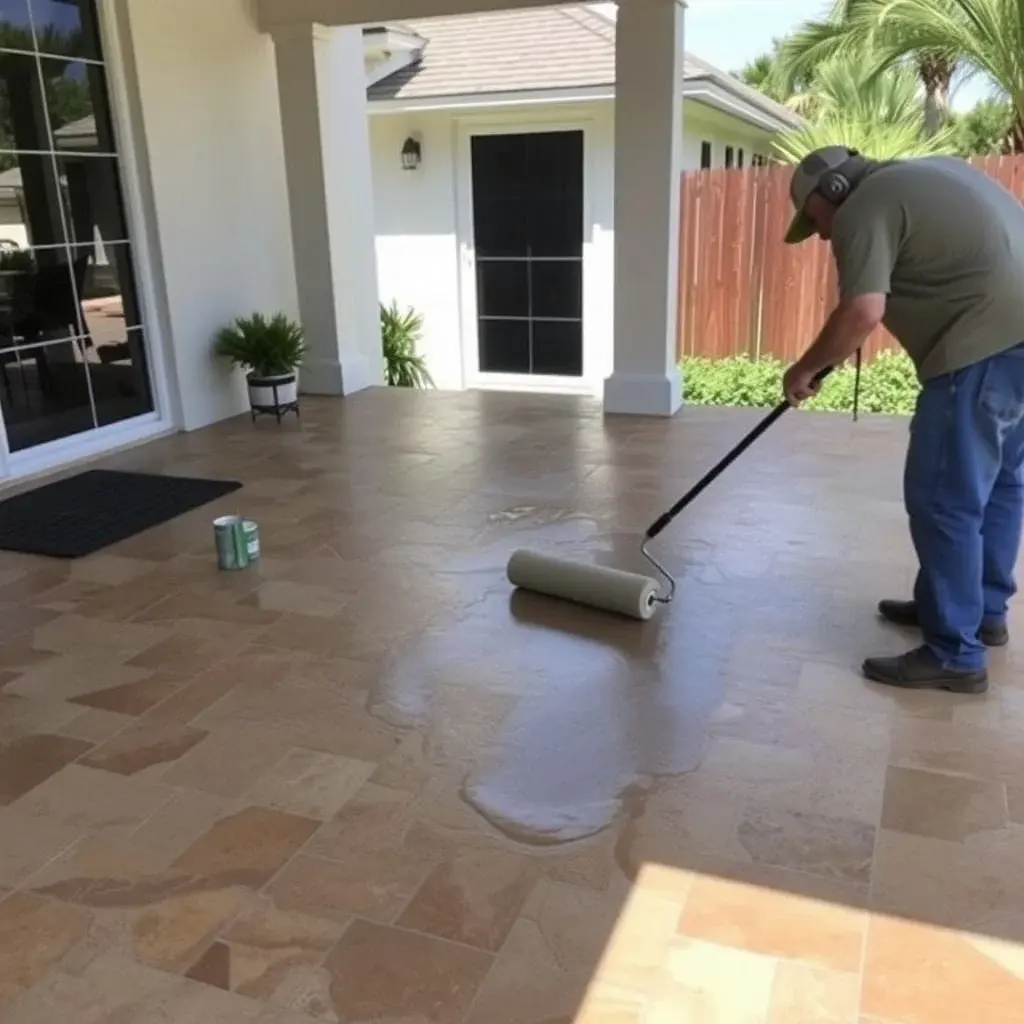
DIY sealing is straightforward for anyone comfortable with a pump sprayer and a roller. Clean the surface thoroughly — a pressure washer on a low setting for pavers and concrete, a stone-safe cleaner for travertine and flagstone. Let the surface dry completely — 24 to 48 hours of dry weather. Apply the sealer in thin, even coats with a sprayer, then back-roll to eliminate puddles. Two thin coats are better than one thick coat.
Professional sealing adds cleaning and stain treatment that a DIY job typically skips. If your patio has oil stains, organic staining, or efflorescence, professional cleaning before sealing produces a better result. The sealer application itself is similar — the value is in the surface preparation.
Frequently Asked Questions
What is the best sealer for pavers?
A water-based acrylic sealer for concrete pavers — it enhances color without creating a glossy film. A penetrating siloxane sealer for brick pavers — it protects without changing the natural look. Avoid film-forming sealers on brick — they trap moisture in the brick and cause spalling in freeze-thaw climates.How often should you seal a patio?
Every 2 to 5 years depending on material and sun exposure. [Stamped concrete](/patios/types/stamped-concrete) and [travertine](/patios/types/travertine): every 2 to 3 years. Pavers and plain concrete: every 3 to 5 years. Patios in full Florida sun should be resealed closer to the 2-year mark — UV degrades sealer faster in southern climates.Can I seal my patio myself?
Yes — it is one of the most DIY-friendly patio maintenance tasks. Clean the surface, let it dry completely, apply sealer with a pump sprayer, and back-roll. Materials cost $120 to $300 for a 400-square-foot patio. Professional sealing costs $400 to $1,200 and includes cleaning and stain treatment that a DIY job typically does not.Patio Sealing Services in Your Area
Our partnered contractors handle patio sealing across Central and Western Florida:
- The Villages: Patio sealing in The Villages
- Central Florida: Clermont patio sealing · Gainesville patio sealing
- Tampa Bay Coast: Clearwater patio sealing · Largo patio sealing
Related services: Patio Installation · Patio Repair · Patio Remodeling
Ready to Seal Your Patio?
We connect you with up to three licensed contractors for professional patio sealing. Free estimates, no obligation. Call (352) 555-0194 or visit our patio sealing services page.
Related reading: Stamped Concrete Patios · Travertine Patios · Paver Patios