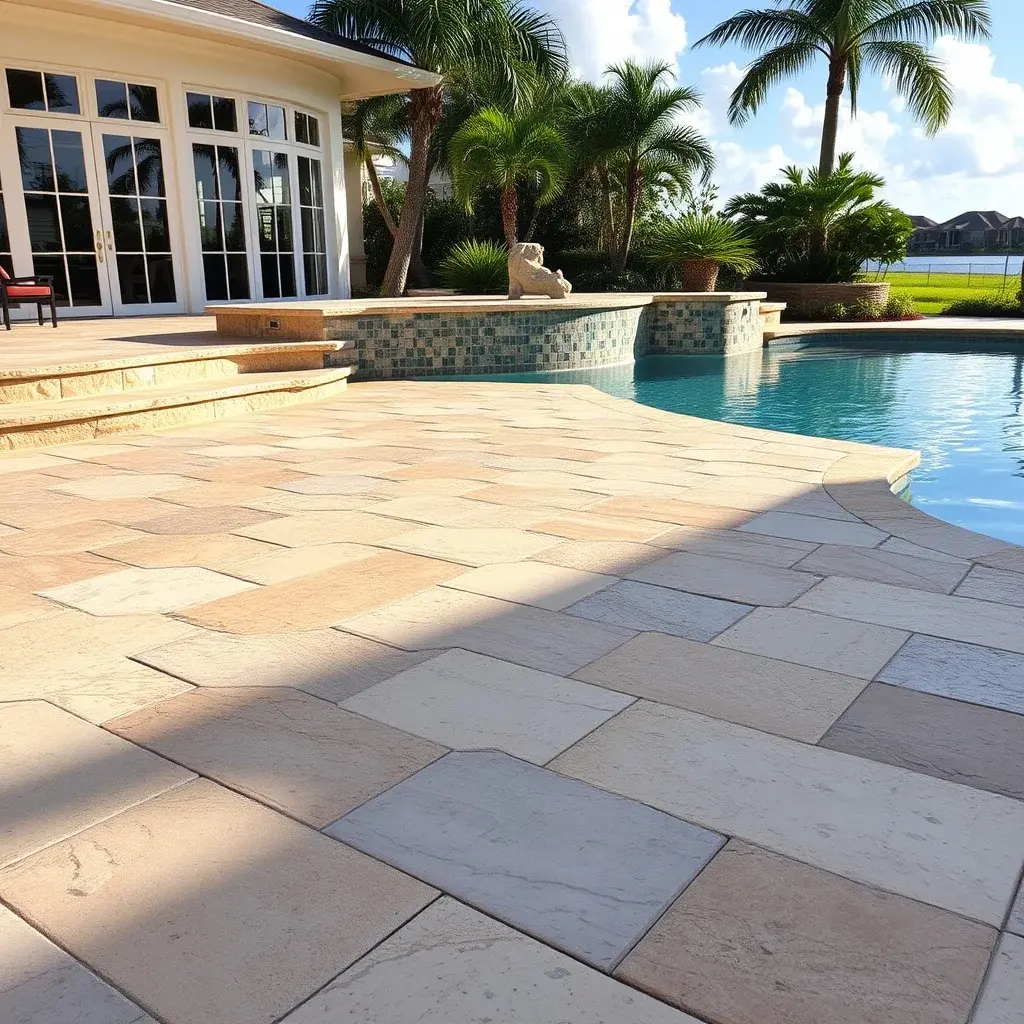
Travertine Patios: Cost, Benefits, and Why It Stays Cool
Last updated 2026-07-30
Travertine is a natural limestone with a property no other patio material can match: it stays cool underfoot even in direct Florida sun. The stone is naturally porous, which means it reflects less heat than dense concrete or brick. Walk barefoot across a travertine pool deck at 2 PM in July and the surface is warm, not scalding. That single quality makes travertine the default choice for pool decks in warm climates — and the material of choice for patios where people walk barefoot. Here is what travertine costs and what to know before you buy.
What Is Travertine
Travertine is a natural limestone formed by mineral springs. It has a fibrous, porous structure with visible pits and voids throughout the stone — these are not defects, they are the defining characteristic of the material. The pits give travertine its texture, its heat-reflective properties, and its natural, old-world appearance.
Travertine is quarried primarily in Turkey, Italy, and Mexico. It is cut into pavers, tiles, and coping for outdoor use. The most common colors for patio travertine are ivory, beige, walnut, and silver — all natural earth tones that blend with landscaping and complement pool water. The stone is softer than granite or marble but harder than limestone, which makes it durable enough for foot traffic and soft enough to cut and shape easily during installation.
How Much Does Travertine Cost
| Item | Cost |
|---|---|
| Travertine pavers (material) | $5–$15 per sq ft |
| Installation (base, setting, joint sand) | $8–$15 per sq ft |
| Sealing (initial) | $1–$2 per sq ft |
| Total installed | $15–$30 per sq ft |
A 400-square-foot travertine patio costs $6,000 to $12,000 installed. The material cost varies by quality — premium Turkish travertine with consistent color and fewer filled holes costs more than commercial-grade Mexican travertine with more natural variation. Tumbled pavers cost less than honed. The installation cost is similar to other paver materials — the base preparation and setting are the same process.
Travertine is more expensive than concrete pavers ($12 to $22 per square foot) and more expensive than stamped concrete ($8 to $18). It is comparable to high-end flagstone ($15 to $30). The premium is for the natural stone look and the heat-reflective property — no manufactured material replicates both.
Why Travertine Stays Cool
Travertine stays cool because it is porous. The stone is full of microscopic voids that trap air, which acts as an insulator. Dense materials like concrete and brick conduct heat straight through from the surface to your foot. Travertine interrupts that heat transfer — the air pockets in the stone slow down the conduction. The result: a travertine surface in direct sun is 10 to 15 degrees cooler than a concrete paver of the same color in the same conditions.
This is the single reason travertine dominates the pool deck market in warm climates. A concrete pool deck hurts to walk on barefoot in July. A travertine deck is warm but walkable. If your patio is primarily around a pool, travertine is worth the premium for the comfort alone.
Finish Options
Tumbled: Pavers are mechanically tumbled to round the edges and create a weathered, rustic look. The surface has a natural texture with visible pits and voids. Tumbled travertine has the most grip when wet and is the best choice for pool decks. Some of the larger pits are filled with grout during installation — the smaller ones are left open for texture.
Honed: The surface is ground smooth and flat with a matte finish — not glossy, but even and consistent. Honed travertine has a more refined, modern look than tumbled. It is smoother underfoot but still has enough texture for outdoor use. The pits are filled at the factory for a uniform surface.
Polished: The surface is ground to a glossy, reflective finish. Polished travertine is for indoor use only — it becomes dangerously slippery when wet and is not suitable for patios or pool decks. Do not use polished travertine outdoors.
Sealing and Maintenance
Travertine must be sealed. The stone is porous — unsealed travertine absorbs water, stains from leaves and spills, and etches from acidic liquids like citrus juice or pool chemicals. A penetrating sealer fills the pores without creating a surface film, so the stone still breathes and retains its natural texture. Seal on installation and reseal every 2 to 3 years.
Clean travertine with a pH-neutral stone cleaner — never use acidic cleaners, vinegar, or bleach, which etch the surface. Sweep regularly to prevent debris from accumulating in the pits. Over time, the surface develops a natural patina that many homeowners prefer — the stone looks lived-in and aged rather than new and uniform.
Frequently Asked Questions
Does travertine really stay cooler than concrete?
Yes — 10 to 15 degrees cooler in direct sun. The porous stone structure traps air, which acts as an insulator and slows heat conduction. This is measurable with a surface thermometer and noticeable barefoot. It is the primary reason travertine is the most popular pool deck material in warm climates.Is travertine slippery when wet?
Tumbled travertine has natural texture and grip — it is one of the best non-slip surfaces for pool decks. Honed travertine is smoother but still has enough texture for wet feet. Polished travertine is slippery when wet and should not be used outdoors.How long does travertine last?
Indefinitely — it is natural stone. Travertine does not wear out from foot traffic. The surface may develop a patina over decades of use, and the color may lighten slightly from UV exposure, but the stone itself does not degrade. Sealer maintenance is the only ongoing requirement. A travertine patio installed today will look essentially the same in 30 years.Travertine Patio Installers in Your Area
Our partnered contractors handle travertine paver installation across Central and Western Florida:
- The Villages: Travertine patio installation in The Villages
- Central Florida: Clermont patio installation · Gainesville patio installation
- Tampa Bay Coast: Clearwater patio installation · Largo patio installation
Compare patio types: Paver patios · Flagstone patios · Stamped concrete
Ready to Build Your Travertine Patio?
We connect you with up to three licensed travertine installers. Free estimates, no obligation. Call (352) 555-0194 or visit our patio installation services page.
Related reading: Paver Patios · Flagstone Patios · Patio Sealing · Patio Installation