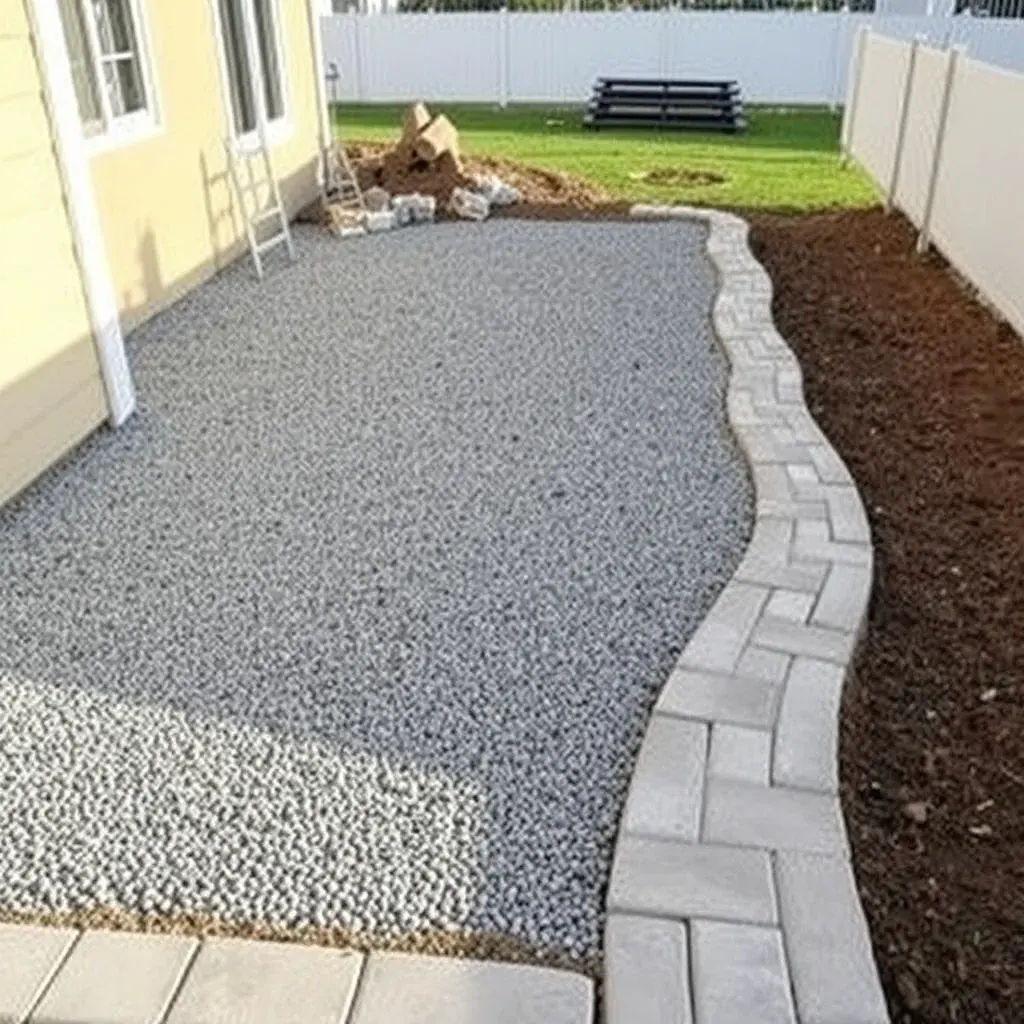
Patio Installation: Cost, Process, and Tips by Material
Last updated 2026-07-30
Installing a patio transforms an unused patch of yard into usable outdoor living space — a place to eat, entertain, and relax. The process takes 1 to 3 weeks depending on material and size, costs $8 to $30 per square foot installed, and involves excavation, base preparation, paving, and finishing. Here is exactly what happens at each stage, what it costs by material, and how to hire the right contractor.
What's Included in Patio Installation
A patio installation contract should include everything from excavation to the final seal. Standard inclusions: site excavation, base material (compacted gravel), sand setting bed (for pavers), paving material, edge restraints, joint sand, and initial sealing if required. Standard exclusions: demolition of existing concrete, retaining walls, drainage systems beyond the patio perimeter, landscaping, lighting, and any structure above the patio surface like a pergola or roof.
Confirm what is included before signing. A contract that lists "paver patio — 400 sq ft" with no line items leaves room for add-ons. A contract that lists excavation, 6 inches of compacted gravel base, 1 inch of sand setting bed, concrete pavers at $X per square foot, edge restraints, polymeric joint sand, and initial sealing — that contract protects you.
How Much Does Patio Installation Cost
Patio installation costs $8 to $30 per square foot installed depending on material — stamped concrete is the most affordable at $8–$18/sq ft, while travertine and flagstone are premium options at $15–$30/sq ft. A 400-square-foot patio runs $3,200 to $12,000.
| Material | Cost per Sq Ft Installed | 400 Sq Ft Total |
|---|---|---|
| Stamped concrete | $8–$18 | $3,200–$7,200 |
| Concrete pavers | $12–$20 | $4,800–$8,000 |
| Brick pavers | $15–$22 | $6,000–$8,800 |
| Travertine | $15–$30 | $6,000–$12,000 |
| Flagstone | $15–$30 | $6,000–$12,000 |
Base preparation adds $3 to $5 per square foot and is included in these installed costs. If your yard has poor drainage, unstable soil, or requires demolition of an existing patio, add $2 to $8 per square foot for the additional work.
Get three written quotes with line-item breakdowns. The spread between the highest and lowest bid for the same patio material and size is typically $2,000 to $4,000 — the difference is usually in the base preparation depth, the quality of the materials, and the contractor's experience.
The Installation Process Step by Step
Site preparation (1-2 days): The area is excavated to the required depth — typically 7 to 10 inches below the finished patio height to accommodate the base, setting bed, and paver thickness. Soil is removed or stockpiled. The subgrade is compacted.
Base installation (1 day): Crushed gravel is spread in 2 to 3-inch lifts, wetted, and compacted with a plate compactor between each lift. The standard base is 4 to 6 inches for paver patios. In Florida, where sandy soil can shift, 6 to 8 inches is recommended. The base is screeded to the correct slope — 1 percent minimum away from the house for drainage.
Setting bed and paving (1-3 days): A 1-inch layer of coarse sand is screeded as the setting bed. Pavers are laid in the chosen pattern. Edge restraints are installed and pinned into the base. For stamped concrete, the slab is poured and stamped in a single continuous operation — timing is critical, and the crew must complete the stamping before the concrete sets beyond the working window.
Joint sand and compaction (1 day): Joint sand is swept into the gaps between pavers. The entire surface is compacted with a plate compactor — this locks the pavers into the sand bed and forces sand into the joints. The process is repeated until the joints are full. For stamped concrete, a sealant is applied after the concrete cures for 7 days.
Cleanup and finishing (1 day): Excess sand is swept off. The surface is cleaned. For pavers, the initial sealant is applied if specified in the contract. The patio is ready for furniture immediately after sealing dries.
Permits and Site Preparation
A building permit is typically not required for a ground-level patio that is not attached to the home and does not exceed a certain square footage — but this varies by municipality. Permits are required for: attached structures like covered patios, electrical work for lighting or outlets, gas lines for fire features, and large impervious surfaces that affect stormwater drainage. Your contractor should know what requires a permit in your city and handle the application.
HOA or CDD architectural review applies to visible hardscaping in most communities. The review covers the patio material, color, and how it looks from the street. Submit your plans during the review phase. A patio installed without HOA approval that violates community standards can be ordered removed — this is rare but expensive when it happens.
Frequently Asked Questions
How much does patio installation cost?
$8 to $30 per square foot installed depending on material. [Stamped concrete](/patios/types/stamped-concrete) is the most affordable at $8 to $18 per square foot. [Travertine](/patios/types/travertine) and [flagstone](/patios/types/flagstone) are premium at $15 to $30 per square foot. A 400-square-foot patio costs $3,200 to $12,000 depending on material choice.How long does patio installation take?
One to 3 weeks depending on material and size. Paver patios take 1 to 2 weeks — excavation, base, and paving flow in sequence. Stamped concrete takes about 2 weeks — the pour and stamp happen in one day, but the concrete must cure for 7 days before sealing.What is the best base for a patio?
Compacted crushed gravel — 4 to 6 inches for standard soil, 6 to 8 inches in Florida where sandy soil can shift. The gravel should be angular (crushed stone), not round (pea gravel). Round gravel does not compact — the pieces roll against each other instead of locking together. A geotextile fabric between the native soil and the gravel base prevents the gravel from mixing with the soil over time.Do I need a permit for a patio?
Ground-level patios typically do not require a building permit, but check locally. Permits are required for attached structures, electrical work, gas lines, and surfaces that affect drainage. Your contractor should know your municipality's requirements and handle the permit if one is needed.Patio Installation Services in Your Area
Our partnered contractors handle patio installation across Central and Western Florida:
- The Villages: Patio installation in The Villages
- Central Florida: Clermont patio installation · Gainesville patio installation
- Tampa Bay Coast: Clearwater patio installation · Largo patio installation
Related services: Patio Extension · Patio Sealing · Patio Remodeling
Ready to Install Your Patio?
We connect you with up to three licensed patio contractors. Free estimates, no obligation. Call (352) 555-0194 or visit our patio installation services page.
Related reading: Stamped Concrete Patios · Paver Patios · Travertine Patios · Flagstone Patios