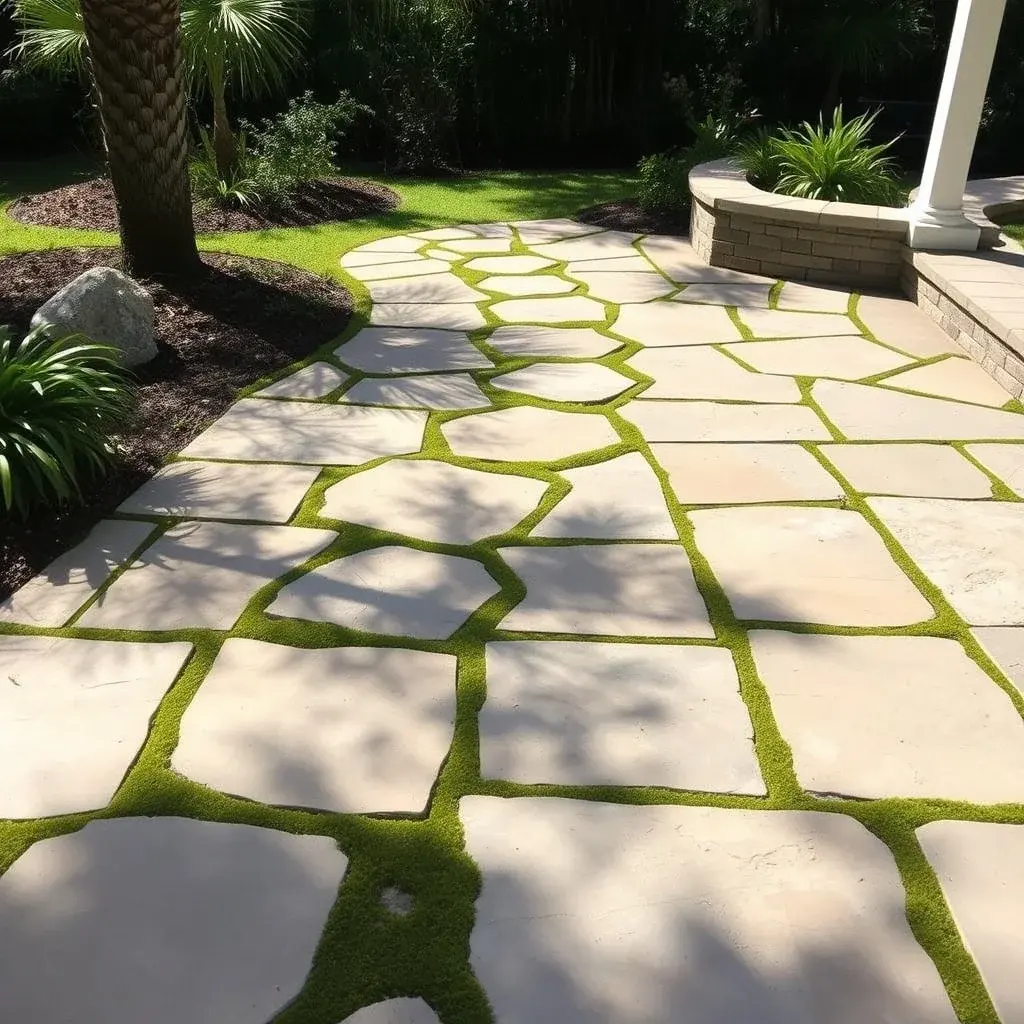
Flagstone Patios: Natural Stone Cost and Installation
Last updated 2026-07-30
Flagstone is natural stone cut into flat, irregular slabs and fitted together like a puzzle. No two flagstone patios look the same because no two stones are identical — the color, shape, and texture vary from piece to piece. It is the most natural-looking patio surface you can install, and it costs accordingly. Here is what flagstone costs, what stone types are available, and how it is installed.
What Is Flagstone
Flagstone is sedimentary rock — typically sandstone, limestone, or bluestone — that splits naturally into flat layers. The stone is quarried in large sheets and then broken into irregular slabs 1 to 3 inches thick. Unlike manufactured pavers, flagstone is not uniform — each piece has a unique shape, thickness, and color variation. The installer fits the pieces together on-site, cutting edges as needed to close gaps, creating a surface that looks like it was always there.
Flagstone is the material that stamped concrete tries to imitate. The imitation captures the general pattern but not the depth — real flagstone has genuine texture, color variation through the thickness of the stone, and an irregular surface that manufactured products approximate but do not replicate.
How Much Does Flagstone Cost
| Stone Type | Cost per Sq Ft (Installed) | Characteristics |
|---|---|---|
| Sandstone | $15–$22 | Warm earth tones, soft, easy to cut |
| Limestone | $15–$22 | Light colors, consistent, good for hot climates |
| Bluestone | $18–$28 | Dense, blue-gray, hard-wearing, premium |
| Quartzite | $20–$30 | Hardest, most durable, limited color range |
A 400-square-foot flagstone patio costs $6,000 to $12,000 installed. The stone itself is $4 to $10 per square foot. Installation is the larger cost — $8 to $15 per square foot — because fitting irregular stones takes more labor than laying uniform pavers. The installer spends more time selecting, cutting, and fitting each piece than they would with manufactured pavers.
Stone Types
Sandstone is the most common and most affordable flagstone. Colors range from buff and gold to red and brown. Sandstone is relatively soft and easy to cut, which keeps installation cost down. It is porous and requires sealing. In freeze-thaw climates, lower-grade sandstone can delaminate — the surface flakes off in layers. For Florida, this is not a concern.
Limestone is lighter in color — creams, grays, and pale blues. It stays cooler in the sun than darker stones and is a good choice for pool decks and sunny patios. Travertine is a type of limestone with a particularly porous structure. Standard limestone flagstone is denser than travertine and costs less.
Bluestone is a dense, hard sandstone quarried primarily in the northeastern US. It is blue-gray in color, wears exceptionally well, and is the premium choice for traditional and formal patios. Bluestone costs more than standard sandstone and is harder to cut, which increases installation labor.
Quartzite is the hardest flagstone — nearly as hard as granite. It comes in silvers, grays, and taupes. Quartzite is virtually indestructible in a patio application but is difficult to cut, which increases installation time and cost. It is the best choice if durability is the overriding concern and budget allows.
Installation Methods
Sand-Set (Dry-Laid)
Stones are set on a compacted gravel base with a sand setting bed, and the joints are filled with sand or polymeric sand. This is the most common method for patios and walkways. The surface is flexible — it moves slightly with ground shifts rather than cracking. Individual stones can be lifted and re-leveled if settling occurs. Water drains through the joints into the base.
Mortar-Set
Stones are set in a mortar bed on top of a concrete slab, and the joints are filled with mortar. The surface is rigid and permanent. Mortar-set flagstone looks more formal and finished, but it has the same weakness as concrete — if the base cracks, the stone on top cracks with it. Mortar-set is best for covered patios and entryways where the base is a structural slab. For ground-level patios exposed to rain and ground movement, sand-set is the better choice.
Frequently Asked Questions
Is flagstone slippery when wet?
Natural flagstone has a textured surface that provides good grip — better than smooth concrete or polished stone. Sandstone and quartzite have naturally rough surfaces. Bluestone can be smoother. For pool decks, choose a stone with natural texture and specify a non-slip finish if the stone is being cut and honed.Does flagstone need to be sealed?
Sealing is recommended — it protects against staining and makes the surface easier to clean. Flagstone is porous and absorbs spills, leaf tannins, and dirt. A penetrating sealer fills the pores without leaving a surface film. Seal every 2 to 3 years. Unsealed flagstone develops a natural patina that some homeowners prefer — the choice is aesthetic.Can flagstone be repaired?
Yes — one of the advantages of sand-set flagstone. A cracked or stained stone can be lifted out and replaced with a new piece. The new stone may not match the surrounding stones in color or weathering immediately, but it will blend over time. Mortar-set flagstone repairs are more difficult — the mortar around the damaged stone must be chiseled out and re-pointed.Flagstone Patio Installers in Your Area
Our partnered contractors handle flagstone patio installation across Central and Western Florida:
- The Villages: Flagstone patio installation in The Villages
- Central Florida: Clermont patio installation · Gainesville patio installation
- Tampa Bay Coast: Clearwater patio installation · Largo patio installation
Compare patio types: Travertine patios · Paver patios · Stamped concrete
Ready to Build Your Flagstone Patio?
We connect you with up to three licensed stone installers. Free estimates, no obligation. Call (352) 555-0194 or visit our patio installation services page.
Related reading: Travertine Patios · Paver Patios · Patio Installation