Paver Patios: Cost, Materials, and Installation Guide
Last updated 2026-07-30
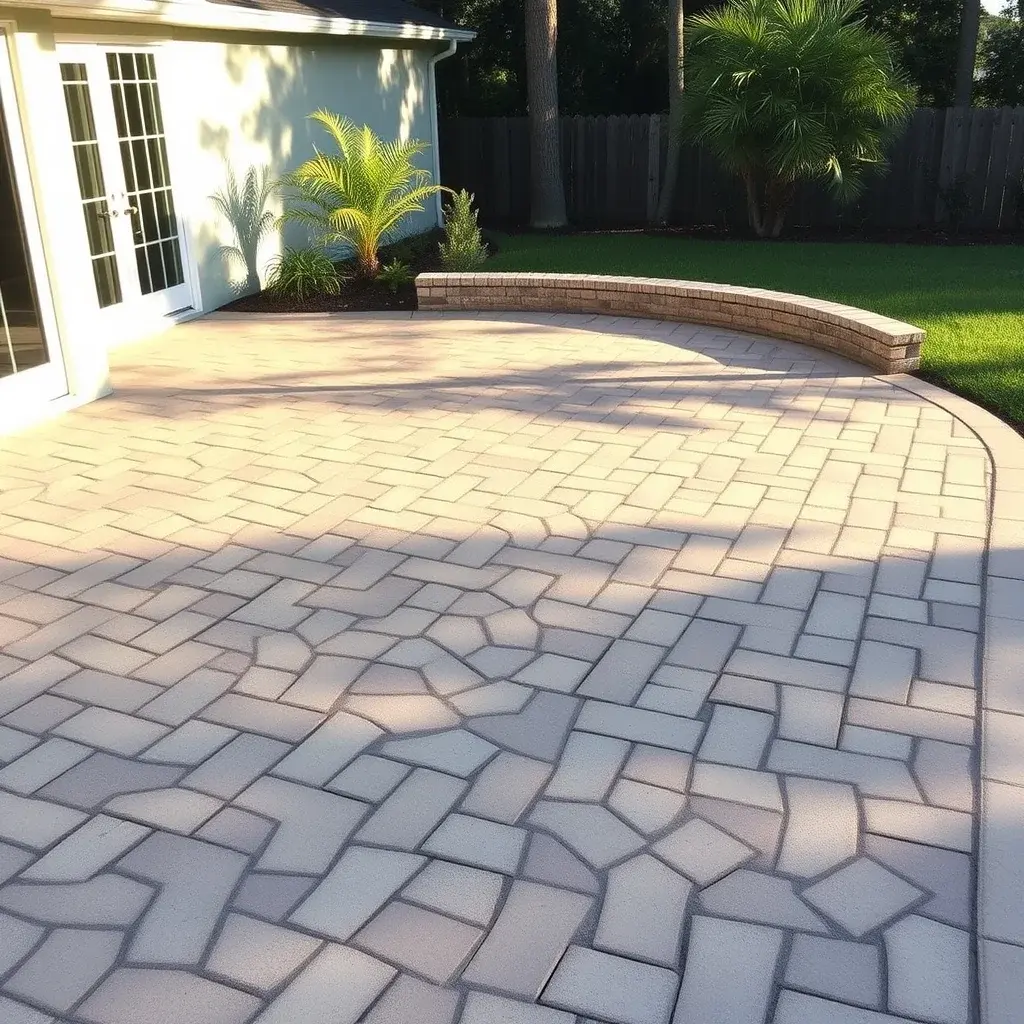
Paver patios are built from individual units — concrete, brick, or natural stone — laid on a compacted base and locked together with joint sand. They are the best choice for drainage, for repairability, and for the widest range of material options at every price point. When a paver cracks, you replace the paver, not the patio. Here is what you need to know about paver patios: cost, materials, installation, and how they compare to the alternatives.
What Are Paver Patios
A paver patio is a surface made of individual paving units — concrete, clay brick, or natural stone — set on a compacted gravel and sand base. The pavers are not mortared in place. They lock together through friction: joint sand swept into the gaps between pavers binds them laterally, and edge restraints around the perimeter hold the entire surface in compression.
The key advantage of pavers is repairability. If a paver cracks or stains, you lift that one paver out and replace it. You do not cut out a section of concrete. You do not patch a surface that will never match. This makes pavers the best choice for patios in areas with ground movement, freeze-thaw cycles, or tree roots — anything that might cause cracking over time.
How Much Do Paver Patios Cost
| Paver Material | Cost per Sq Ft (Installed) | 400 Sq Ft Total |
|---|---|---|
| Concrete (standard) | $12–$16 | $4,800–$6,400 |
| Concrete (tumbled/textured) | $15–$20 | $6,000–$8,000 |
| Clay brick | $15–$22 | $6,000–$8,800 |
| Travertine | $15–$30 | $6,000–$12,000 |
| Flagstone (irregular) | $18–$30 | $7,200–$12,000 |
Base preparation and drainage add cost for any paver patio — $3 to $5 per square foot for the gravel base, sand setting bed, and compaction. This is included in the installed costs above. If your yard has poor drainage or unstable soil, a deeper base or geotextile fabric adds $2 to $4 per square foot.
Paver Materials
Concrete Pavers
Concrete pavers are manufactured in molds — available in dozens of shapes, sizes, colors, and textures. Standard concrete pavers cost $2 to $5 per square foot for the material alone. Tumbled or textured pavers that mimic natural stone cost $4 to $8 per square foot. Concrete pavers are the most affordable paver option and the most versatile — you can mix sizes and colors to create patterns that poured concrete cannot achieve.
Clay Brick Pavers
Clay brick pavers are the classic choice — thin bricks fired at high temperature for a dense, hard-wearing surface. They cost $4 to $8 per square foot for the material and hold their color indefinitely because the color is fired through, not applied to the surface. Brick pavers are smaller than concrete pavers — typically 4×8 inches — which means more units to lay and higher labor cost. The classic herringbone pattern with brick pavers is one of the most durable paver surfaces you can install.
Travertine Pavers
Travertine is a natural limestone with a porous, textured surface. It has one property that no other paver material matches: it stays cool in direct sun. The porous stone reflects less heat than dense concrete or brick, making travertine the best choice for pool decks and sunny patios where people walk barefoot. Travertine pavers cost $5 to $15 per square foot for the material and require sealing to protect against staining.
Installation: The Base Is Everything
A paver patio is only as good as the base underneath it. The base provides drainage, prevents settling, and keeps the pavers from shifting. The standard base for a residential paver patio: 4 to 6 inches of compacted gravel (crushed stone, not round gravel) topped with 1 inch of coarse sand as a setting bed. In Florida, where sandy soil drains well but can shift, 6 to 8 inches of compacted base is recommended — the extra depth prevents the pavers from sinking into the native soil over time.
Edge restraints — plastic or aluminum strips pinned into the base along the perimeter — are mandatory. Without them, the pavers at the edge spread outward under foot traffic and the entire surface loosens. Do not let a contractor skip the edge restraints to save $200. You will have spreading pavers within two years.
Paver Patios vs Stamped Concrete vs Flagstone
Pavers are the middle-ground option: more expensive than stamped concrete, less expensive than natural flagstone. They are individually replaceable — a cracked paver takes 10 minutes to swap. Stamped concrete repairs are visible. Flagstone is the premium natural option — each stone is unique, and the surface has genuine depth and texture that manufactured pavers approximate but do not match.
Frequently Asked Questions
How long do paver patios last?
Twenty-five to 50 years or more. The pavers themselves are virtually indestructible — concrete pavers are rated for 8,000+ PSI compressive strength. The base is the limiting factor: a properly compacted base in stable soil lasts decades. A poorly compacted base shows settling within 2 to 5 years. The pavers can be lifted, the base re-leveled, and the same pavers re-laid — a repair option that concrete and stamped concrete do not have.Do paver patios need sealing?
Sealing is optional but recommended — it protects against stains, reduces weed growth in the joints, and enhances color. Seal every 3 to 5 years. Unsealed pavers will develop a natural patina and may stain from leaves, spills, and pool chemicals. Sealing costs $1 to $2 per square foot professionally.Are paver patios good for Florida?
Yes — with the right base depth. Florida's sandy soil drains well but can shift. A 6 to 8-inch compacted gravel base with geotextile fabric separating the base from the native soil prevents the pavers from sinking. Pavers also handle Florida's rain better than solid concrete because water drains through the joints into the base rather than pooling on the surface.Paver Patio Installers in Your Area
Our partnered contractors handle paver patio installation across Central and Western Florida:
- The Villages: Paver patio installation in The Villages
- Central Florida: Clermont patio installation · Gainesville patio installation
- Tampa Bay Coast: Clearwater patio installation · Largo patio installation
Compare patio types: Stamped concrete · Travertine · Flagstone
Ready to Build Your Paver Patio?
We connect you with up to three licensed paver installers. Free estimates, no obligation. Call (352) 555-0194 or visit our patio installation services page.
Related reading: Stamped Concrete Patios · Travertine Patios · Flagstone Patios · Patio Installation