Infinity Pools: Design, Cost, and Building Guide
Last updated 2026-07-30
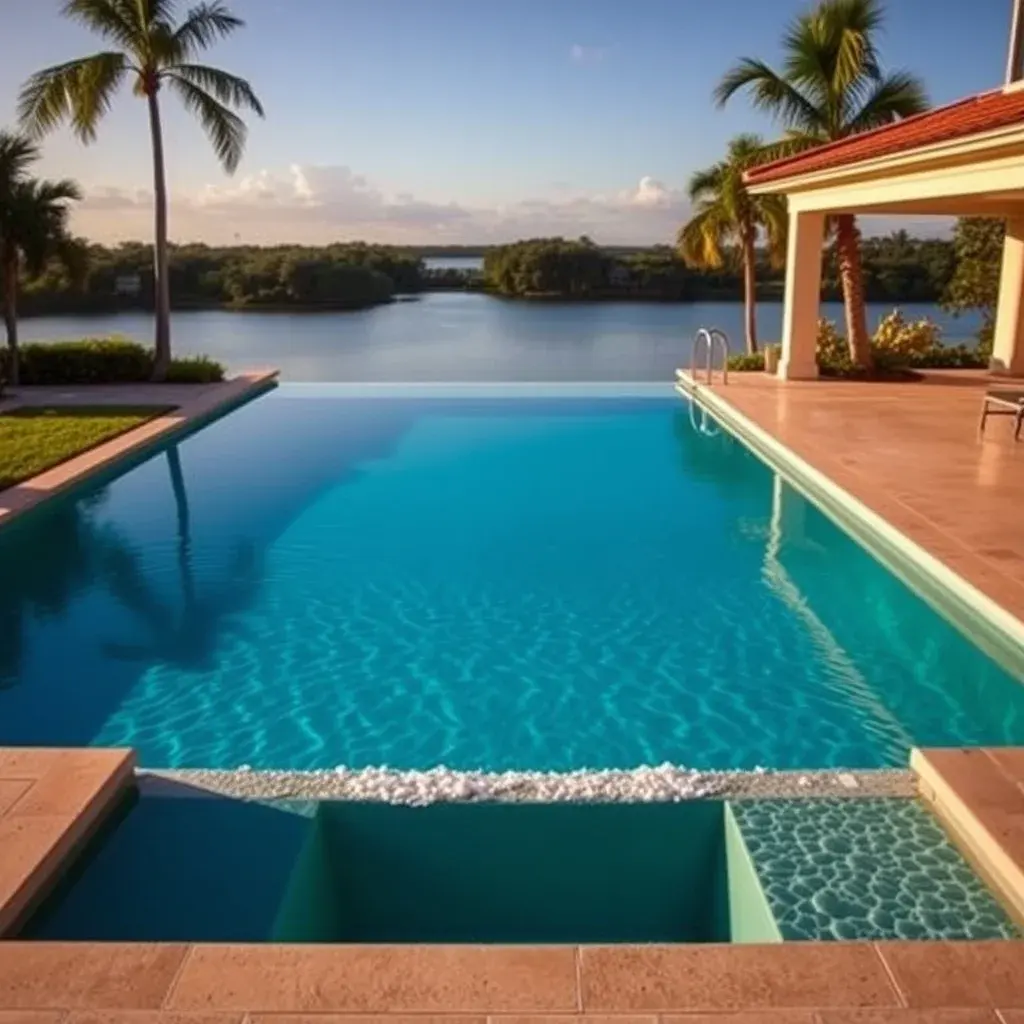
An infinity pool — also called a vanishing edge, negative edge, or zero edge pool — creates the illusion that the water extends to the horizon with no visible boundary. One edge of the pool appears to drop off into nothing, with water spilling over a submerged weir wall into a catch basin below. It is the single most dramatic design element you can add to a pool, and it is also one of the most expensive. Here is how it works, what it costs, and what you need to know before committing.
What Is an Infinity Pool
An infinity pool creates the optical illusion that the water has no boundary on one or more sides. In reality, one wall of the pool — called the weir wall — is built slightly lower than the water level. Water flows over this submerged edge into a catch basin hidden below. A dedicated pump in the catch basin sends the water back into the main pool through return jets, creating a continuous loop.
The catch basin is the hidden half of the system. It sits below the weir wall, out of sight from the main viewing angle. It is essentially a small secondary pool — typically 3 to 5 feet wide and as deep as the main pool — that holds the overflow water. When the pump is running, water rises to the weir level and spills over. When the pump stops, the catch basin fills with the overflow and the main pool water level drops to just below the weir.
Single Edge vs Multi-Edge vs Perimeter Overflow
A single-edge infinity pool is the most common — one wall vanishes toward a view. Multi-edge designs have two or three vanishing edges, often wrapping around a corner. Perimeter overflow pools, also called knife-edge pools, have water spilling over all four sides into a hidden channel. Perimeter overflow is the most expensive variant — it requires precise leveling across the entire perimeter and a channel system that runs the full circumference of the pool.
How Much Does an Infinity Pool Cost
The infinity edge system is an add-on to a concrete pool, not a separate pool type. The base pool costs $45,000 to $100,000+. The infinity edge adds another $20,000 to $40,000 on top of that.
| Component | Standard Pool | With Infinity Edge |
|---|---|---|
| Pool shell (concrete) | $45,000–$100,000+ | $45,000–$100,000+ |
| Catch basin and surge tank | — | $8,000–$15,000 |
| Weir wall engineering | — | $3,000–$6,000 |
| Dedicated recirculation pump | — | $1,500–$3,000 |
| Additional plumbing | — | $2,000–$4,000 |
| Auto-fill and level sensors | — | $1,000–$2,500 |
| Total edge premium | — | $20,000–$40,000 |
An infinity pool with a single edge on a standard concrete shell typically costs $65,000 to $140,000 total. A perimeter overflow design can push the total above $200,000. The edge system also adds complexity that requires a contractor with specific infinity-edge experience — this is not a design feature that every pool builder can execute correctly. An improperly leveled weir wall produces an uneven spill that looks worse than no edge at all.
Best Settings for an Infinity Pool
Hillside and Sloped Lots
The best setting for an infinity pool is a sloped lot where the vanishing edge faces downhill toward a view. The slope naturally creates the elevation difference between the pool and the catch basin, which reduces excavation cost. On a flat lot, the catch basin must be dug down and hidden behind a retaining wall, which adds cost and complexity.
Lakefront and Ocean View Properties
Infinity pools on lakefront or ocean-view properties create the illusion that the pool merges with the water beyond. The visual effect is strongest when the pool edge aligns with the horizon line or the far shoreline. If you are building near a natural body of water, check local environmental regulations — some jurisdictions restrict pool drainage near wetlands, lakes, or coastal zones, and the catch basin overflow must be routed accordingly.
For natural-looking settings, freeform pools with organic curves pair well with lakefront infinity edges. For modern architectural homes, a geometric infinity pool with clean right angles creates a sharper, more deliberate vanishing line.
Materials That Work with Infinity Edges
Concrete — specifically gunite or shotcrete — is the only material that works for a true infinity edge. The weir wall must be built on-site to precise tolerances. The entire pool shell, catch basin, and weir wall are a single continuous concrete structure. Fiberglass pools come as pre-formed shells that cannot be modified for a vanishing edge. Vinyl liner pools use a flexible liner that cannot form the sharp, level weir edge required.
The catch basin can be finished in dark plaster or dark tile to make it visually disappear below the water surface. A dark basin also absorbs sunlight and helps warm the recirculated water slightly before it returns to the main pool.
Maintenance and What to Know Before Building
An infinity pool requires more maintenance than a standard pool. The catch basin collects leaves, pollen, and debris that spill over the edge. It needs to be skimmed and vacuumed regularly — sometimes more often than the main pool. The dedicated recirculation pump runs separately from the main filter pump and needs its own maintenance schedule.
Water level management is critical. Evaporation and splash-out mean the pool loses water faster than a standard pool — especially on windy days when water spills over the edge in gusts rather than a clean sheet. An auto-fill system with a level sensor is standard on infinity pools and should be inspected monthly. If the auto-fill fails, the catch basin pump can run dry and burn out within hours.
Some HOAs and architectural review boards have specific rules about infinity edges — particularly if the catch basin or retaining wall is visible from neighboring properties. Confirm during the permit phase that your design meets local view-corridor requirements.
Frequently Asked Questions About Infinity Pools
How much more does an infinity pool cost than a regular pool?
An infinity edge adds $20,000 to $40,000 to the base cost of a concrete pool. The catch basin, surge tank, weir wall engineering, dedicated pump, and additional plumbing account for the premium. A perimeter overflow design on all four sides can add $60,000 or more. The cost table above breaks down every component.
Can you have an infinity pool with fiberglass?
No. Fiberglass pools are pre-formed shells that cannot be modified to create a vanishing edge. Concrete — gunite or shotcrete — is the only option. If you want the look of an infinity pool but have budget constraints, a raised spa with a spillover into the main pool creates a similar water-in-water effect at a lower cost.
Do infinity pools use more water?
Yes — evaporation and splash-out are higher because water is constantly moving over the weir edge. On a windy day, water spilling over in gusts rather than a clean sheet increases loss. An auto-fill system is standard equipment on infinity pools to maintain the correct water level automatically.
Are infinity pools harder to maintain?
Yes. The catch basin needs separate skimming and vacuuming. The recirculation pump requires its own maintenance schedule. Debris that spills over the edge collects in the basin. If the auto-fill sensor fails, the basin pump can run dry and fail. Budget an extra $50 to $100 per month for additional maintenance compared to a standard pool of the same size.
Infinity Pool Builders in Your Area
Infinity edge pools require specialized concrete expertise. Our partnered contractors handle precision weir-wall construction, catch basin engineering, and permitting across Central and Western Florida:
- The Villages: Infinity pool installation in The Villages
- Central Florida: Clermont pool builders · Gainesville pool builders
- Tampa Bay Coast: Clearwater pool installation · Largo pool installation
Explore other designs: Freeform pools · Geometric pools · Lap pools
Ready to Get a Quote for Your Infinity Pool?
We connect you with up to three licensed concrete pool contractors who have built infinity edge pools in your area. Free estimates, no obligation. Call (352) 555-0194 or visit our pool installation services page.
Related reading: Concrete Pools · Freeform Pools · Geometric Pools · Pool Installation