Concrete Pools: Gunite, Shotcrete, Cost, and Lifespan Guide
Last updated 2026-07-30
Concrete pools are the original in-ground pool — built on-site by spraying gunite or shotcrete over a steel rebar framework. They are the only pool type that can be built in any shape, any depth, and any size. They also cost the most and require the most maintenance. Here is everything you need to know about concrete pools — what they are, what they cost, how long they last, and whether they are the right choice for your yard.
What Are Concrete Pools
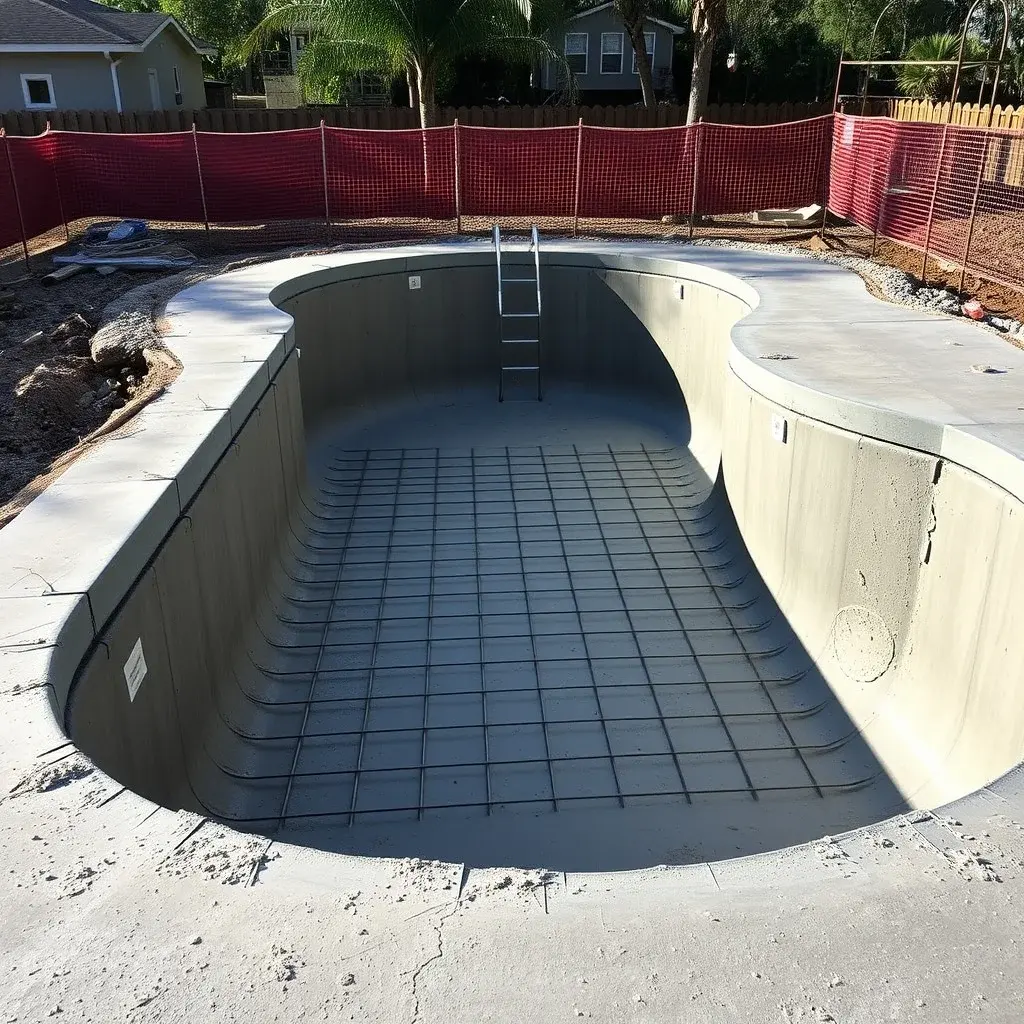
Concrete pools — also called gunite or shotcrete pools — are built entirely on-site. A steel rebar framework is assembled first, forming the shape of the pool. Then a concrete mixture is sprayed onto the rebar at high pressure. Gunite is a dry mix that combines with water at the nozzle. Shotcrete is a wet mix that arrives pre-mixed. Both produce the same result: a continuous, seamless concrete shell that hardens into a single structural unit.
Once the shell cures for about a week, the interior is finished with plaster, pebble aggregate, or quartz. The plaster layer is what you see and feel — it is not structural, but it protects the concrete shell from water and chemicals. The finish also determines how smooth or rough the surface feels and how long it lasts before resurfacing is needed.
Concrete is the only material that allows complete design freedom. Want a 60-foot lap pool? A freeform lagoon that wraps around an old oak tree? An infinity edge that vanishes into a lake view? Concrete does all of them.
How Much Does a Concrete Pool Cost
Concrete pools cost more than fiberglass or vinyl liner pools of the same size because the entire shell is built by hand on-site. There is no factory mold, no pre-formed shell — every square foot of surface is sprayed, troweled, and finished by a crew.
| Cost Factor | Concrete | Fiberglass | Vinyl Liner |
|---|---|---|---|
| Shell | $45,000–$80,000 | $30,000–$55,000 | $25,000–$45,000 |
| Excavation | $3,000–$8,000 | $1,500–$4,000 | $1,500–$4,000 |
| Deck | $4,000–$12,000 | $3,000–$8,000 | $3,000–$8,000 |
| Equipment | $3,500–$7,000 | $2,000–$4,000 | $2,000–$4,000 |
| Annual maintenance | $1,800–$3,000 | $1,200–$2,400 | $1,500–$2,700 |
| Resurfacing (every 12-15 yrs) | $4,000–$8,000 | None needed | $2,500–$4,500 (liner) |
| Lifespan | 25+ years | 25+ years | 8–12 years (liner) |
A standard plaster finish lasts 12 to 15 years before resurfacing. Upgrading to a PebbleTec or quartz finish adds $3,000 to $5,000 upfront but extends the resurfacing interval to 15 to 20 years and produces a smoother surface. For a pool you plan to use for 20+ years, the upgraded finish pays for itself by delaying the first resurfacing.
Maintenance and Lifespan
Concrete pools require more maintenance than fiberglass or vinyl liner pools. The rough plaster surface is porous — algae takes hold more easily, meaning more brushing and more chemical adjustment. The surface also affects water chemistry: fresh plaster raises pH and calcium levels for the first year, requiring more frequent testing and acid additions.
The resurfacing cycle is the defining maintenance event. Every 12 to 15 years — or 15 to 20 with upgraded finishes — the pool must be drained, the old plaster chipped off or acid-washed, and a new finish applied. This costs $4,000 to $8,000 and takes 3 to 5 days. It is not optional — once the plaster wears through to the gunite shell, water seeps into the concrete and structural damage begins.
Annual maintenance runs $1,800 to $3,000 for chemicals, cleaning, and equipment upkeep. Weekly brushing is not optional with concrete — it is required to prevent algae from embedding in the porous surface.
Designs That Work with Concrete Pools
Concrete works with every pool design ever conceived. Freeform pools with organic curves. Geometric pools with razor-sharp lines. Infinity edges with vanishing weir walls. Beach entries with gradual slopes. Lap pools at any length.
If you want a cocktail pool with a baja shelf in a specific corner of the yard or a plunge pool with a swim jet built into a custom L-shape, concrete does it. The design is limited only by your yard, your budget, and the structural requirements of the shell — concrete itself does not constrain you.
Concrete vs Fiberglass vs Vinyl Liner
Concrete wins on customization and durability — no other material can match the shape freedom or the 25+ year shell lifespan. It loses on upfront cost, maintenance burden, and installation timeline (8 to 12 weeks for concrete vs 2 to 4 weeks for fiberglass).
Fiberglass is the better choice if you want the lowest possible maintenance and are willing to choose from a catalog of predetermined shapes. Vinyl liner is the better choice if upfront cost is the overriding concern and you accept that the liner will need replacement every 8 to 12 years.
Frequently Asked Questions
What is the difference between gunite and shotcrete?
Gunite is a dry concrete mix that combines with water at the spray nozzle. Shotcrete is a wet mix that arrives pre-mixed in the truck. Both produce the same finished shell. The terms are often used interchangeably. The difference matters to the contractor — gunite requires more skill at the nozzle to control the water ratio — but the homeowner sees no difference in the finished pool.How often does a concrete pool need resurfacing?
Standard plaster: every 12 to 15 years. PebbleTec or quartz aggregate finish: every 15 to 20 years. The finish type, water chemistry maintenance, and climate all affect the actual interval. Pools in warm climates with year-round use tend to need resurfacing closer to the 12-year mark.Are concrete pools harder to maintain than fiberglass?
Yes. The porous plaster surface requires more brushing to prevent algae, more chemical adjustment to maintain balance, and weekly attention that fiberglass pools do not need. Expect to spend 2 to 3 hours per week on maintenance for a concrete pool versus 1 to 2 hours for fiberglass of the same size.Can concrete pools use saltwater systems?
Yes, but with caution. Saltwater accelerates the breakdown of plaster finishes and can corrode natural stone coping and deck materials if not sealed properly. If you want a saltwater concrete pool, seal the coping annually and budget for more frequent resurfacing — expect the 12-year interval to become 10 years.Concrete Pool Builders in Your Area
Our partnered concrete contractors handle custom gunite and shotcrete pools across Central and Western Florida:
- The Villages: Concrete pool installation in The Villages
- Central Florida: Clermont pool builders · Gainesville pool builders
- Tampa Bay Coast: Clearwater pool installation · Largo pool installation
Compare materials: Fiberglass pools · Vinyl liner pools
Ready to Build Your Concrete Pool?
We connect you with up to three licensed gunite and shotcrete contractors. Free estimates, no obligation. Call (352) 555-0194 or visit our pool installation services page.
Related reading: Fiberglass Pools · Vinyl Liner Pools · Pool Designs · Pool Installation