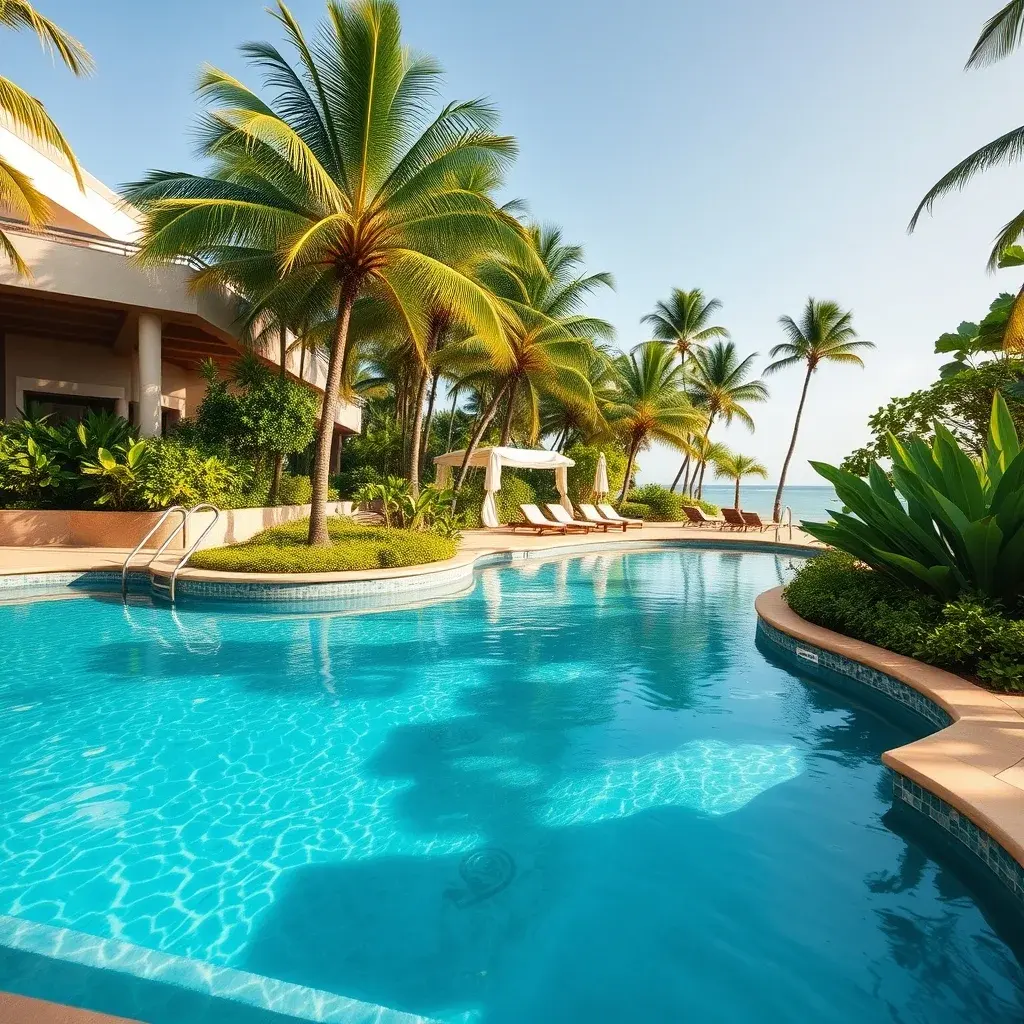
Beach Entry Pools: Zero-Entry Design, Cost, and Guide
Last updated 2026-07-30
A beach entry pool — also called a zero-entry pool or walk-in pool — replaces traditional stairs with a gradual slope that lets you walk into the water the same way you walk into the ocean. The floor starts at the deck level and slopes down to the pool's main depth over a distance of 8 to 15 feet. There are no steps, no ladders, and no sudden drops. It is the single best design feature for accessibility, and it also happens to look like a resort. Here is what you need to know about design, cost, and what makes a beach entry work.
What Is a Beach Entry Pool
A beach entry pool has no stairs at the shallow end. Instead, the pool floor begins at deck level and slopes gradually into the water — like a boat ramp or a natural shoreline. The slope is typically 1:7 to 1:10, meaning the floor drops 1 foot of depth for every 7 to 10 feet of horizontal distance. At that grade, the water reaches knee depth after 3 to 4 feet, waist depth after 7 to 8 feet, and the pool's full depth after 10 to 15 feet.
The beach entry surface is finished with a textured material — exposed aggregate, pebble, or slip-resistant tile — to provide grip on the slope. Smooth plaster or polished surfaces on a beach entry become dangerously slippery when wet. Non-slip texture is not optional here; it is the difference between a safe entry and a fall hazard.
How Much Does a Beach Entry Cost
A beach entry adds cost to a concrete pool in two ways: the sloped area requires more shell surface area than a vertical wall would, and the grading must be precise during gunite application. The premium is $3,000 to $8,000 on top of the base pool cost.
| Cost Factor | Standard Concrete Pool | With Beach Entry |
|---|---|---|
| Base shell | $45,000–$80,000 | $45,000–$80,000 |
| Beach entry slope | — | $3,000–$8,000 |
| Non-slip surface finish (textured) | — | $1,000–$3,000 |
| Additional deck area (entry approach) | — | $1,000–$2,500 |
| Total premium | — | $5,000–$13,500 |
The beach entry also consumes usable pool area. An 8-foot-long slope at the shallow end of a 30-foot pool leaves 22 feet of full-depth swimming area. On a smaller pool — say 20 feet total — the slope can eat up nearly half the length. Plan your pool dimensions with the slope in mind so you do not end up with a pool that is 40 percent ramp and 60 percent swimming area.
Accessibility: Why Beach Entries Matter
A beach entry is the best accessibility feature you can add to a pool. No stairs mean no lifting your knees to step down. No ladders mean no upper-body strength required. You walk in on a gentle slope with a textured surface underfoot — the same motion as walking into a lake or the ocean.
For seniors with knee, hip, or balance concerns, a beach entry is often the difference between using the pool daily and avoiding it entirely. For families with small children, a beach entry creates a natural shallow play area where toddlers can sit in an inch of water and gradually wade deeper as they gain confidence. For anyone in a wheelchair, a beach entry with a properly graded slope and a waterproof chair makes the pool accessible without a mechanical lift.
If accessibility is the primary goal, pair a beach entry with non-slip coping, handrails at the slope entry, and a baja shelf in the shallow area for seated lounging.
Materials That Work with Beach Entries
Concrete is the standard material for beach entry pools. Gunite and shotcrete can be sprayed and shaped into a smooth, consistent slope during construction. The finish on the slope should be textured — exposed aggregate or pebble — for slip resistance.
Some fiberglass manufacturers offer models with integrated beach entries molded into the shell. Brands like Thursday Pools and Latham have beach-entry fiberglass models. The slope angle and length are fixed by the mold — you cannot customize the grade. If the factory slope works for your needs, fiberglass offers the advantage of a smooth gelcoat surface and no resurfacing. If you need a specific slope angle or a longer entry zone, concrete is the only option.
Vinyl liner pools cannot do a true beach entry. The liner material cannot hold a gradual slope without stretching, wrinkling, and eventually tearing. Some vinyl liner pools offer a graduated step system as an alternative, but it is not the same as a continuous slope.
Beach Entry vs Traditional Steps
Traditional pool steps take up less space — 3 to 5 feet of pool length versus 8 to 15 feet for a beach entry. They cost nothing extra because they are part of the standard shell. If space is tight and accessibility is not a concern, standard steps are the practical choice.
But if you or someone in your household has mobility concerns, the beach entry is worth the space and cost. No one ever regrets building a pool they can walk into comfortably for the rest of their life. The alternative — realizing five years later that the stairs are becoming a barrier — is an expensive retrofit.
Frequently Asked Questions About Beach Entry Pools
How long does a beach entry need to be?
Eight to 15 feet of horizontal run is standard. At a 1:7 slope, a beach entry drops 1 foot of depth every 7 feet of length. To reach a depth of 3.5 to 4 feet — deep enough to stand and then swim — you need 8 to 12 feet of beach entry. A longer, gentler slope (1:10) takes 15 feet to reach 4 feet but is easier to walk on for anyone with mobility concerns.
Do beach entries work with automatic covers?
They can, but it is more complex. The cover track must run along both sides of the beach entry slope, and the cover fabric must be able to follow the angled bottom profile. Some automatic cover manufacturers offer beach-entry-compatible track systems. Expect to pay a premium for the custom fabrication — similar to the premium for curved freeform covers.
Is a beach entry slippery?
It can be if finished with smooth plaster or polished tile. The solution is a textured finish — exposed aggregate, pebble, or purpose-made non-slip pool tile — on the sloped surface. The texture provides grip even when the surface is wet. This is a standard specification on beach entry pools and should be included in the builder's finish schedule, not treated as an optional upgrade.
Can you have a beach entry with a fiberglass pool?
Yes, if the manufacturer offers a beach-entry model in their catalog. Thursday Pools and Latham both produce fiberglass shells with integrated beach entries. The slope angle and length are fixed — you cannot customize them. If the factory beach entry dimensions work for your yard and accessibility needs, fiberglass installs faster and never needs resurfacing.
Beach Entry Pool Builders in Your Area
Our partnered concrete contractors handle beach entry grading and non-slip surface finishing across Central and Western Florida:
- The Villages: Beach entry pool installation in The Villages
- Central Florida: Clermont pool builders · Gainesville pool builders
- Tampa Bay Coast: Clearwater pool installation · Largo pool installation
Explore other designs: Freeform pools · Cocktail pools · Geometric pools
Ready to Build Your Beach Entry Pool?
We connect you with up to three licensed concrete pool contractors who have built beach entry pools. Free estimates, no obligation. Call (352) 555-0194 or visit our pool installation services page.
Related reading: Concrete Pools · Freeform Pools · Cocktail Pools · Pool Installation