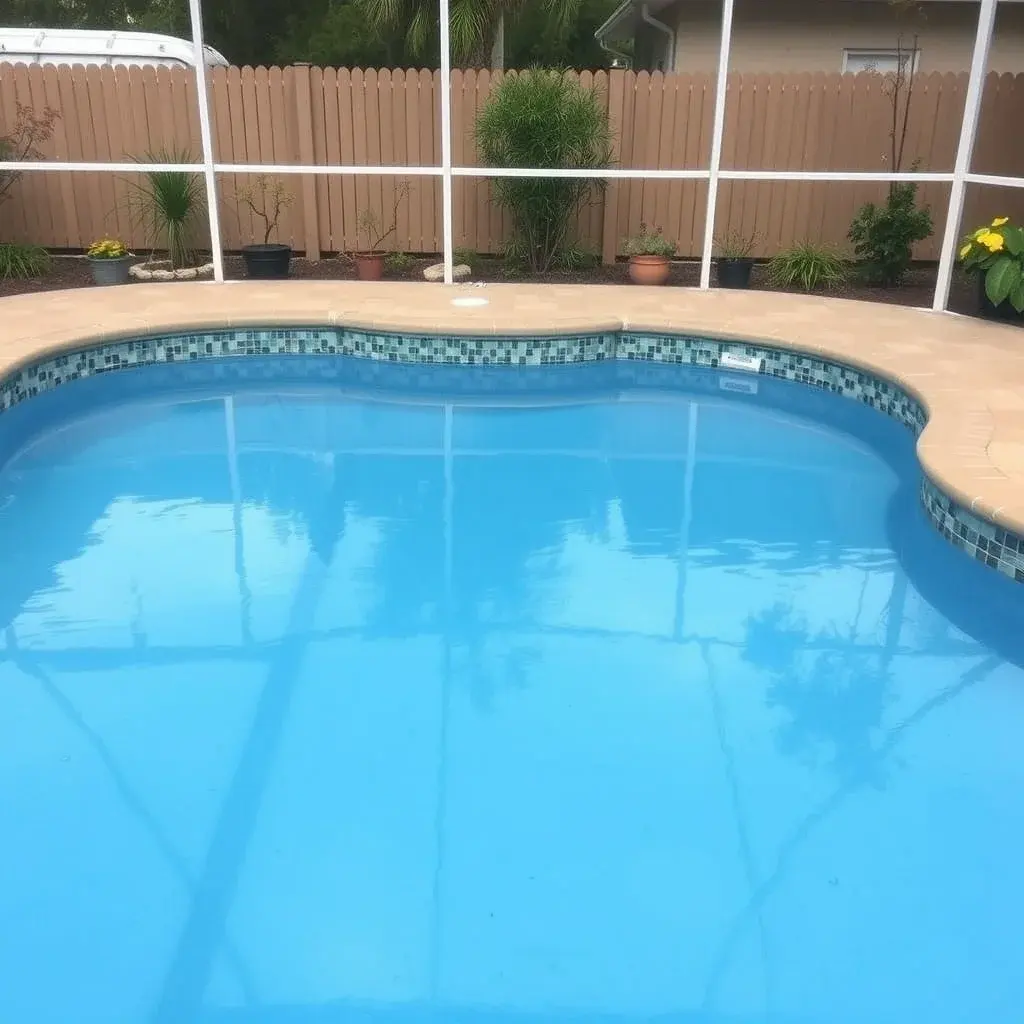
Vinyl Liner Pools: Cost, Liner Types, and Replacement Guide
Last updated 2026-07-30
A vinyl liner pool is the most affordable way to get an in-ground pool. A flexible PVC liner is stretched over a frame structure — steel, polymer, or concrete block — to create a smooth, watertight surface. The liner is the wearing surface and the waterproof barrier in one layer. It costs less upfront than concrete or fiberglass, but it wears out and needs replacement every 8 to 12 years. Here is what you need to know.
What Are Vinyl Liner Pools
A vinyl liner pool uses a flexible PVC sheet — typically 20 to 30 mils thick — as both the waterproof barrier and the finished surface. The liner is stretched over a frame made of galvanized steel, polymer, or concrete block wall panels. It is held in place at the top edge by a coping track that locks the liner bead into position. The floor of the pool is typically a sand or vermiculite base shaped to the desired contour.
Vinyl liner pools are the most affordable in-ground option upfront. A basic rectangular vinyl liner pool costs $25,000 to $35,000 all-in — about half the cost of a comparable concrete pool. The tradeoff is the liner itself: it is a wear item with an 8 to 12 year lifespan. When it wears out, the pool must be drained, the old liner removed, and a new one installed.
How Much Does a Vinyl Liner Pool Cost
The upfront savings are real. The long-term math is closer than it looks because of liner replacement costs.
| Cost Factor | Vinyl Liner | Fiberglass | Concrete |
|---|---|---|---|
| Pool shell/kit + install | $25,000–$45,000 | $30,000–$60,000 | $45,000–$100,000+ |
| Deck | $3,000–$8,000 | $3,000–$8,000 | $4,000–$12,000 |
| Equipment | $2,000–$4,000 | $2,000–$4,000 | $3,500–$7,000 |
| Annual maintenance | $1,500–$2,700 | $1,200–$2,400 | $1,800–$3,000 |
| Surface replacement | $2,500–$4,500 (liner) | None | $4,000–$8,000 (resurface) |
| Replacement interval | Every 8–12 years | Never | Every 12–15 years |
| Lifespan | 8–12 years (liner) / 25+ (frame) | 25+ years | 25+ years |
Over 20 years, a vinyl liner pool requires two liner replacements at roughly $3,500 each — adding $7,000 to the total cost of ownership. That narrows the gap with fiberglass to about $3,000 to $8,000 depending on the specific models compared. The vinyl liner still comes out cheaper over 20 years, but not by as much as the initial quote suggests.
Liner Types and Replacement
Overlap Liners
The liner drapes over the top of the pool wall and is secured with plastic coping strips that clamp it in place. Overlap liners are the most affordable and the easiest to install. The downside is the visible coping strip around the top edge — it looks less finished than other liner types.
Beaded Liners
The liner has a bead welded into the top edge that snaps into a track mounted on the inside of the pool wall. No visible coping strip — the liner disappears into the track. Beaded liners look cleaner but require the track to be in good condition. If the track is damaged or out of alignment, a beaded liner is harder to install than an overlap liner.
Unibead Liners
A unibead liner has a bead that can be used either way — snap it into a track for a beaded installation, or fold it over the wall for an overlap installation with a coping strip. Unibead liners cost slightly more but give the installer the most flexibility. They also produce the cleanest look: if the track is intact, use the beaded side for a seamless edge. If the track is damaged, use the overlap side.
Liner Replacement Process
The pool is drained. The old liner is cut out and removed. The floor is inspected and re-smoothed if necessary. The new liner is unfolded, centered, and attached at the top. A vacuum is run behind the liner to pull it tight against the walls and floor while the pool fills. The entire process takes 1 to 2 days. Most homeowners budget $2,500 to $4,500 for a professional liner replacement including the liner material and labor.
Maintenance and Lifespan
Vinyl liner maintenance falls between concrete and fiberglass. The smooth surface does not collect algae as readily as concrete plaster, so brushing is less frequent. But the liner is vulnerable to physical damage — sharp objects, pet claws, pool toys with hard edges, and abrasive cleaning tools can puncture or tear the liner. Patching a small tear is straightforward with a vinyl repair kit. A large tear near a seam or at the coping track usually means the liner needs replacement.
Chemical maintenance is similar to fiberglass — the inert PVC surface does not affect water chemistry, so pH and alkalinity stay stable. Saltwater systems are not recommended with steel-frame vinyl liner pools because salt accelerates frame corrosion. Polymer-frame vinyl liner pools handle saltwater without issue.
In sunny climates, UV exposure fades the liner pattern over time. The liner is still functional — it just looks washed out. Most homeowners replace the liner for cosmetic reasons before it actually fails structurally.
Shapes and Design Limitations
Vinyl liner pools are limited to rectangles and gentle curves. The liner cannot hold sharp angles, complex freeform contours, or infinity edges. The frame structure also limits depth variations — you can have a hopper bottom with a deeper center section, but you cannot have the kind of dramatic depth changes that concrete allows.
If you want a geometric pool at the lowest possible cost, vinyl liner is the best choice — rectangles are what vinyl liner does best. If you want a custom freeform shape, an infinity edge, or a beach entry with a gradual slope, you need concrete.
Frequently Asked Questions
How long does a vinyl liner last?
Eight to 12 years on average. In sunny climates with high UV exposure, liners fade faster and may be replaced closer to the 8-year mark for cosmetic reasons. In shaded yards with good chemical maintenance, a liner can reach 12 to 15 years before replacement is needed. The liner pattern fading is usually what prompts replacement — the liner is still watertight but looks tired.Can you patch a vinyl liner?
Yes. Small punctures from sharp objects can be patched with a vinyl repair kit while the pool is full. The patch bonds underwater. Tears larger than a few inches or tears at seams and corners are harder to repair reliably — replacement is usually the better long-term solution for significant damage.Are vinyl liner pools less durable than concrete?
The liner itself is less durable — it is a flexible PVC sheet that can be punctured, while concrete is a rigid structural shell. But the frame that holds the liner is steel, polymer, or concrete block and lasts 25+ years. Think of the liner as a wear item, like tires on a car — you replace it periodically, but the car itself keeps going.Can vinyl liner pools be heated?
Yes. Vinyl liners handle pool heater temperatures without issue — the PVC is rated for continuous exposure up to 105°F water temperature. A gas heater or heat pump works the same as it would with any other pool type. Heating costs are actually slightly lower than concrete because the vinyl surface does not absorb and radiate heat the way plaster does.Vinyl Liner Pool Installers in Your Area
Our partnered contractors handle vinyl liner pool installation and liner replacement across Central and Western Florida:
- The Villages: Vinyl liner pool installation in The Villages
- Central Florida: Clermont pool builders · Gainesville pool builders
- Tampa Bay Coast: Clearwater pool installation · Largo pool installation
Compare materials: Concrete pools · Fiberglass pools
Ready to Build Your Vinyl Liner Pool?
We connect you with up to three licensed contractors who install vinyl liner pools. Free estimates, no obligation. Call (352) 555-0194 or visit our pool installation services page.
Related reading: Concrete Pools · Fiberglass Pools · Pool Designs · Pool Installation