Freeform Pools: Natural Shapes, Design Ideas, and Cost Guide
Last updated 2026-07-30
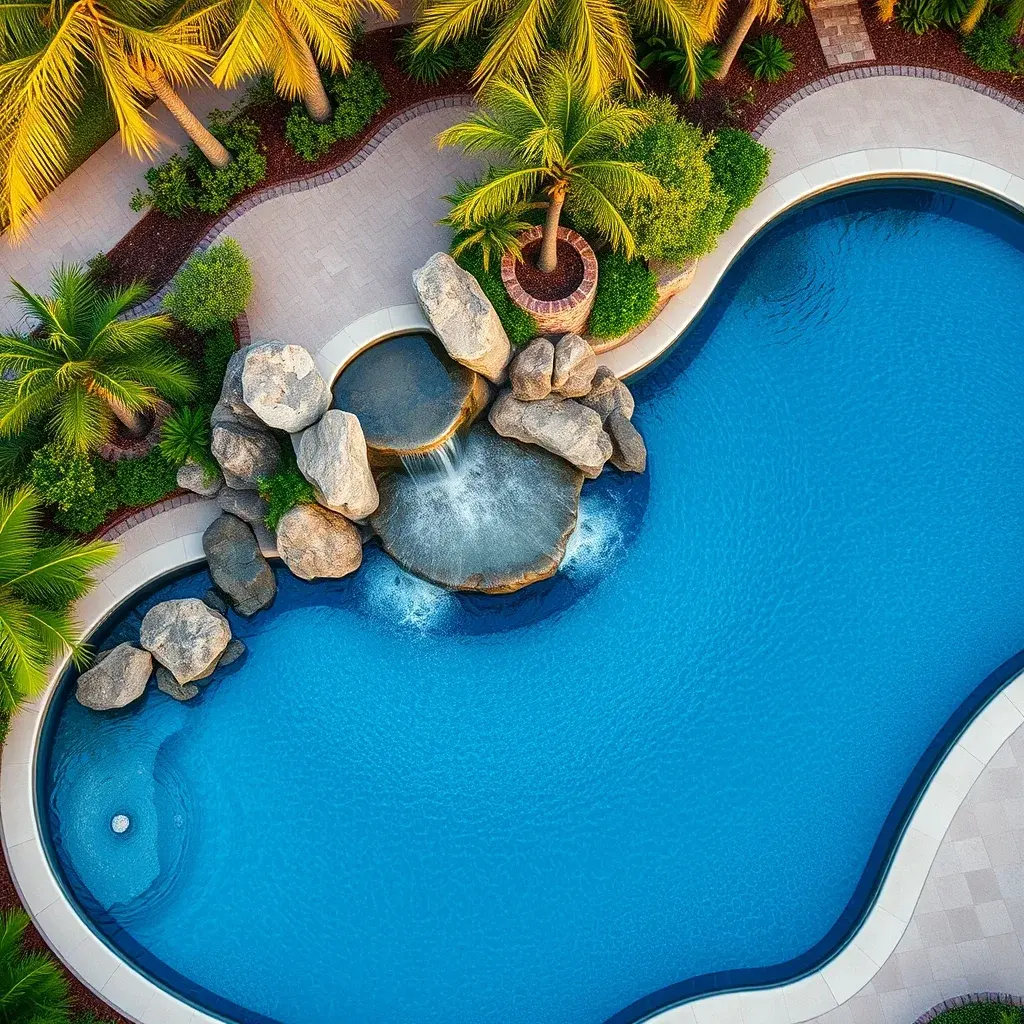
A freeform pool is designed to look like it belongs in nature — no straight lines, no sharp corners, no rigid geometry. The shape curves organically around your landscape, mimicking a natural pond, lagoon, or tropical swimming hole. It is the opposite of a geometric pool and the most popular choice for homeowners who want their backyard to feel like a resort rather than a sports complex. Here is what defines a freeform pool, what it costs, and how to design one that fits your yard.
What Is a Freeform Pool
A freeform pool is an in-ground pool with no straight lines. The perimeter curves organically — kidney shapes, figure-eights, and asymmetrical lagoon contours are the most common patterns. The design goal is to make the pool look like a natural body of water rather than a constructed rectangle. Freeform pools are always built from concrete because gunite and shotcrete can be sprayed into any shape the designer draws. Fiberglass pools come in predetermined molds, and vinyl liner pools are constrained by their frame structure — neither can achieve true freeform curves.
Freeform pools work best in yards with natural landscaping, mature trees, and irregular lot shapes. They pair well with rock waterfalls, boulder coping, tropical plantings, and beach entries that slope gradually into the water like a natural shoreline. A rectangular pool in a wooded lot looks out of place. A freeform pool in the same setting looks like it was always there.
How Much Does a Freeform Pool Cost
Freeform pools cost more than geometric pools of the same square footage because the irregular shape requires more labor. The rebar framework must be bent and tied to match the curves. The gunite application is less uniform — the crew works around turns and coves instead of spraying in straight passes. Tile and coping must be cut to fit curved edges, which produces more waste than straight cuts.
| Cost Factor | Geometric Pool | Freeform Pool |
|---|---|---|
| Base concrete shell | $45,000–$80,000 | $50,000–$90,000 |
| Shape premium (curves, labor) | — | $5,000–$15,000 |
| Rock features (waterfall, grotto) | Rare | $5,000–$20,000 |
| Deck (irregular shape) | $4,000–$10,000 | $5,000–$12,000 |
| Total typical range | $50,000–$90,000 | $60,000–$120,000+ |
Rock features drive the biggest cost variation. A simple freeform pool with curved edges and standard coping stays near the low end. Add a rock waterfall, a grotto with a jumping ledge, and boulder coping, and the total pushes past $120,000. The pool shell itself is not the expensive part — the rockwork is.
Design Features That Work with Freeform Pools
Rock Waterfalls and Grottoes
A rock waterfall integrated into the freeform edge is the most popular add-on. Water cascades over natural or faux boulders into the pool, adding sound and motion. A grotto takes this further — a hollow rock structure with a waterfall curtain that swimmers can sit behind. Grottoes add $10,000 to $20,000 depending on size and complexity.
Beach Entries and Tanning Ledges
A beach entry replaces traditional stairs with a gradual slope that lets you walk into the pool like you would at the ocean. It integrates naturally with a freeform shape because both mimic natural shorelines. A tanning ledge — also called a baja shelf — is a wide, shallow platform just below the water surface where lounge chairs can sit in a few inches of water.
Natural Stone Coping
Irregular flagstone or tumbled travertine coping follows the curved edge better than uniform pavers. Each stone is individually cut and placed to follow the pool's contour. This is slower and more expensive than straight coping but essential to the natural look.
Freeform vs Geometric: Which One Fits Your Yard
A geometric pool is the better choice if your home has modern architecture with clean lines, if you want a lap lane for exercise, or if you plan to use an automatic pool cover — covers are much harder to fit on curved perimeters.
A freeform pool is the better choice if your landscaping is natural or wooded, if you want rock features and waterfalls integrated into the design, or if your lot is irregularly shaped and a rectangle would waste usable yard space. Neither design is objectively better — they serve different aesthetics and different yards.
Frequently Asked Questions About Freeform Pools
Are freeform pools more expensive than rectangular pools?
Yes — typically $5,000 to $15,000 more for the same square footage. The curved shape requires more labor for rebar tying, gunite application, and coping installation. Tile must be cut to fit curves, producing more waste. Rock features like waterfalls and grottoes are also more common on freeform pools and add significantly to the total.
Can fiberglass pools be freeform?
Not truly freeform. Fiberglass pools come in predetermined shapes from the manufacturer's mold library. Some molds have curved edges and organic contours that approximate a freeform look, but you cannot customize the shape. If you want a specific freeform design — a kidney shape that wraps around an existing oak tree, for example — concrete is the only option.
What shape options exist for freeform pools?
The most common freeform shapes are kidney, figure-eight, and lagoon-style asymmetrical curves. The shape is limited only by your yard's dimensions, setbacks, and the structural requirements of the concrete shell. Your designer can draw a shape that works around existing trees, landscape features, and property lines.
Do freeform pools work with automatic covers?
They can, but covers are significantly more expensive and complex on curved pools. An automatic cover requires a track system that follows the pool's perimeter. On a rectangular pool, the tracks are straight and standard. On a freeform pool, the tracks must be custom-fabricated to match the curves, which can add $3,000 to $8,000 to the cover cost.
Freeform Pool Builders in Your Area
Freeform pools require concrete expertise and a designer who understands organic shapes. Our partnered contractors handle custom freeform design and permitting across Central and Western Florida:
- The Villages: Freeform pool installation in The Villages
- Central Florida: Clermont pool builders · Gainesville pool builders
- Tampa Bay Coast: Clearwater pool installation · Largo pool installation
Explore other designs: Infinity pools · Geometric pools · Beach entry pools
Ready to Design Your Freeform Pool?
We connect you with up to three licensed concrete pool contractors who specialize in custom freeform designs. Free estimates, no obligation. Call (352) 555-0194 or visit our pool installation services page.
Related reading: Concrete Pools · Geometric Pools · Beach Entry Pools · Pool Installation