Semi-In-Ground Pools: Cost, Design, and Guide
Last updated 2026-07-30
Not every yard is flat. Not every budget stretches to fifty thousand dollars. And not every HOA allows a fully visible above-ground pool. A semi-in-ground pool solves all three problems at once. It costs about half what a full in-ground pool costs, looks permanent from the outside, and works on sloped lots where a standard above-ground pool would look awkward. Here is everything you need to know — with real numbers, no sales pitch.
What Is a Semi-In-Ground Pool
A semi-in-ground pool is exactly what it sounds like — part of the pool wall is buried in the ground and part of it remains above ground. Most installations bury the pool 2 to 4 feet deep, leaving 1 to 2 feet of the wall exposed above grade. A deck is then built around the exposed portion so the pool looks like an in-ground installation from the outside.
How It Differs from Above-Ground and In-Ground
An above-ground pool sits entirely on top of the ground with its full wall exposed. An in-ground pool is completely excavated and the pool structure is built within the hole — usually concrete, sometimes fiberglass. A semi-in-ground pool splits the difference: the hole is dug, but not as deep. The pool structure is still a manufactured wall-and-liner system like an above-ground pool, but the partial burial gives it the appearance and some of the structural advantages of an in-ground pool.
Best Situations for a Semi-In-Ground Pool
Sloped lots. If your yard drops two to four feet from one end to the other, a standard above-ground pool sits awkwardly on the high side and towers over the low side. A semi-in-ground pool lets you excavate the high side and keep the pool level — the buried portion on the high side transitions naturally to grade on the low side.
HOA workarounds. Many homeowners associations ban above-ground pools outright but are silent on partially buried pools. A semi-in-ground pool surrounded by a deck often satisfies HOA visual requirements because it looks permanent from the street. An experienced contractor who works in your area knows which local communities accept semi-in-ground installations and can tell you during the estimate whether your HOA is likely to approve.
High water tables. In areas where the water table is only a few feet below the surface, digging a full 6 to 8 feet for an in-ground pool is expensive and risky — you may hit groundwater during excavation. A semi-in-ground pool only requires 2 to 4 feet of excavation depth, which stays above the water table in many coastal and low-lying areas.
View preservation. If your yard overlooks a lake, golf course, or conservation area, a fully above-ground pool blocks the view. Burying the pool 3 to 4 feet keeps the sightline open while still giving you a full-depth swimming area on the inside.
Types of Semi-In-Ground Pools
The wall material determines rust resistance, structural integrity when partially buried, and how long the pool lasts.
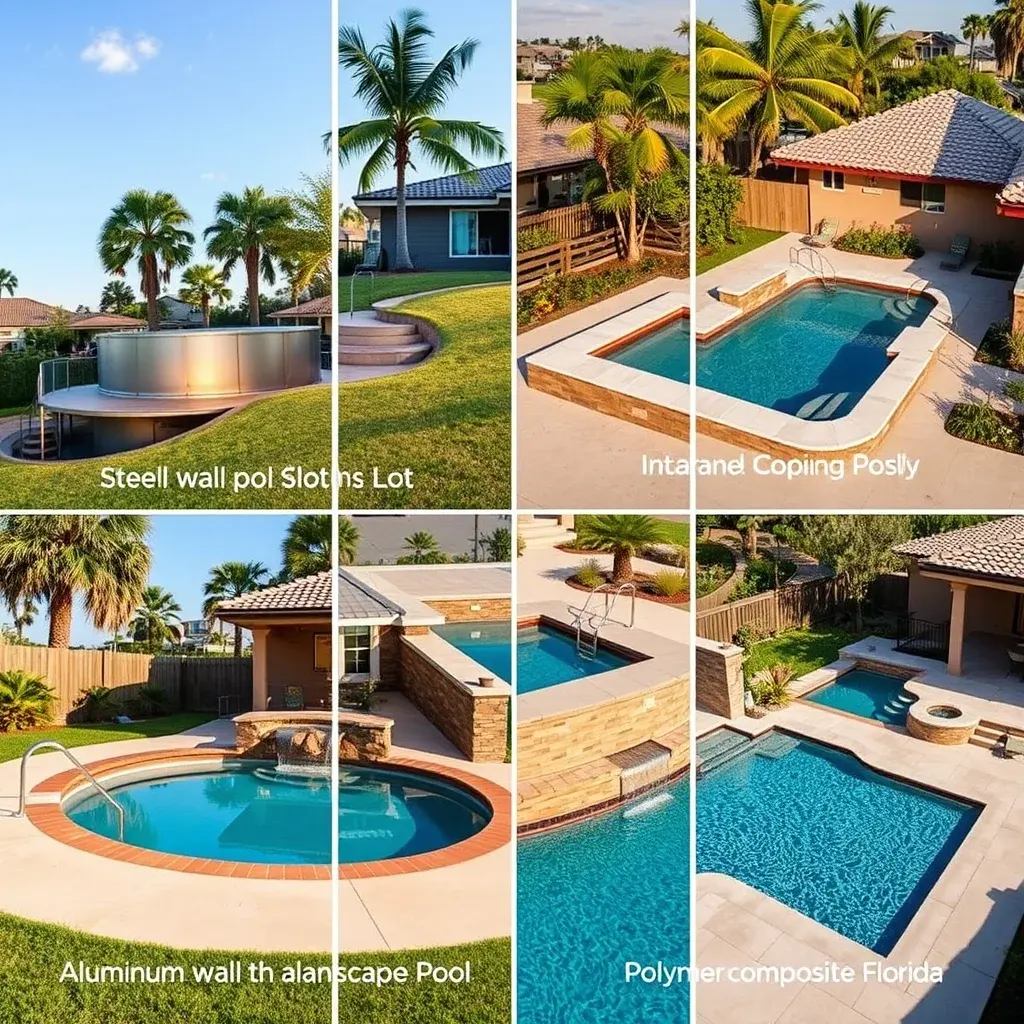
Steel Wall Pools
Steel wall semi-in-ground pools are the most affordable option. The galvanized steel panels are the same as those used in high-end above-ground pools, but with additional bracing designed for partial burial. Brands like Doughboy and Sharkline offer steel semi-in-ground kits.
Steel wall pool kits cost $3,000 to $7,000 for a typical 18 to 24 foot round or oval model. The wall must be protected from soil contact — manufacturers require a specific backfill material and often a protective coating or barrier between the steel and the surrounding earth. If water sits against a steel wall for extended periods, it rusts. Proper drainage and backfill are not optional here.
Aluminum Wall Pools
Aluminum walls eliminate the rust problem entirely. They cost more than steel but are the best choice in humid climates, coastal areas with salt air, and locations with high water tables where the backfill stays damp. Brands like Radiant Pools specialize in aluminum semi-in-ground models — their walls are engineered to handle full soil pressure and do not require the protective barriers that steel walls need.
Aluminum wall pool kits cost $5,000 to $12,000. The higher upfront cost is offset by a lifespan of 25 to 30 years and no risk of wall corrosion. Aluminum also handles freeze-thaw cycles better than steel, which matters if you live in a climate where the ground freezes in winter.
Polymer and Composite Pools
Polymer and thermoplastic composite walls are the newest category. They are completely inert — no rust, no corrosion, no chemical reaction with soil or saltwater. They also insulate better than metal, which keeps the pool water warmer in cooler months. Brands like Hydra Pools and some Doughboy models use polymer wall systems.
Polymer pool kits cost $4,000 to $10,000. The material is lighter than metal, which makes installation easier, but it requires specific backfill compaction procedures to prevent the walls from bowing under soil pressure. Polymer pools are less common than steel and aluminum, so contractor experience with the specific brand matters more here than with other types.
For buyers comparing materials, fiberglass pools can also be installed partially above ground with a surrounding deck, though this is a different technique than a traditional semi-in-ground wall-and-liner system.
How Much Does a Semi-In-Ground Pool Cost
The pool kit is only part of the job. Excavation and backfill drive the installation cost for semi-in-ground pools.
| Item | Semi-In-Ground | Above-Ground (reference) | In-Ground (reference) |
|---|---|---|---|
| Pool kit | $3,000–$12,000 | $500–$6,000 | — |
| Excavation and backfill | $2,000–$6,000 | $500–$2,000 (leveling only) | $5,000–$15,000 (full dig) |
| Deck (wraparound) | $4,000–$12,000 | $2,000–$8,000 | $4,000–$12,000 |
| Equipment (pump, filter) | $1,000–$2,500 | $500–$1,500 | $3,500–$7,000 |
| Annual maintenance | $600–$1,200 | $400–$1,000 | $1,200–$3,000 |
| Lifespan | 15–30 years (wall dependent) | 5–15 years | 25+ years |
A semi-in-ground pool with an aluminum wall, professional excavation, and a wraparound deck typically lands between $15,000 and $25,000 total — roughly 40 to 60 percent of what a comparable concrete in-ground pool costs. The cost gap narrows if you choose a premium aluminum kit with extensive decking, but even at the high end, semi-in-ground stays well below the in-ground price range.
What to Know Before Installing a Semi-In-Ground Pool
Yard Conditions
The ground needs to be excavated to a uniform depth across the entire pool footprint. On a sloped lot, this means cutting into the high side while building up or leaving the low side exposed. The soil type matters — sandy soil drains well but needs compaction to prevent settling. Clay soil holds water against the pool wall and requires a gravel drainage layer. Rocky soil increases excavation cost significantly. A contractor who does a site walk before quoting can tell you what you are dealing with and whether a semi-in-ground pool is viable on your specific lot. If they quote sight-unseen over the phone, get a second opinion.
Water table depth is the other critical factor. If groundwater sits within 2 feet of the surface, you may need a dewatering system during excavation and a permanent drainage solution around the pool. An installer experienced with local soil and water conditions will flag this during the estimate.
HOA and Permit Rules
HOA rules for semi-in-ground pools are inconsistent — some communities classify them as above-ground and apply the same restrictions, others treat them as permanent structures subject to different rules. The pool deck, fencing, and visibility from the street are usually what the HOA cares about most. A semi-in-ground pool with a finished deck that sits at grade level often passes architectural review where a fully exposed above-ground pool would be rejected. Your contractor should handle the HOA submission — but confirm they have done it before in your community.
Most municipalities require a building permit for any excavation deeper than 12 inches, which covers every semi-in-ground installation. The permit process includes setbacks from property lines, electrical bonding requirements, and barrier compliance — same as an in-ground pool. Your contractor should pull the permit as part of the installation contract.
Installation Process
Excavation comes first — 1 to 2 days with a compact excavator for a typical 24-foot pool. The hole is cut to the exact depth and leveled with a laser. A sand or gravel base goes down, then the pool wall panels are assembled and braced. The liner is installed — either an overlap liner secured with coping strips or a beaded liner that snaps into a track. Backfill material is placed against the outside of the wall and compacted in lifts to prevent settling. Plumbing and equipment hookups follow, then the deck construction begins. Total timeline: 2 to 4 weeks from excavation to swimming.
This is not a DIY project. The excavation, wall assembly, backfill compaction, and deck attachment all affect whether the pool stays structurally sound for 20 years or fails in 5. Professional installation is the standard for semi-in-ground pools — the cost savings come from the pool type itself, not from cutting corners on labor.
How Long Do Semi-In-Ground Pools Last
The wall material is the determining factor. Aluminum pools last 25 to 30 years with basic care. Polymer pools are expected to match or exceed that, though they have been on the market for less time so the long-term data is thinner. Steel pools last 15 to 20 years in dry climates and 10 to 15 years in humid environments with proper backfill drainage.
All semi-in-ground pools use a vinyl liner, which needs replacement every 8 to 12 years regardless of wall material. A replacement liner costs $400 to $1,200 for the material plus $800 to $1,500 for installation.
Maintenance Compared to Other Pool Types
Maintenance is similar to an above-ground pool — weekly chemical testing, skimming, filter cleaning, and liner brushing. The partially buried wall reduces the pool's exposure to wind-blown debris compared to a fully above-ground pool, which means less skimming. Water chemistry is easier to manage than in a concrete pool because the vinyl liner does not affect pH or alkalinity the way plaster does. Professional service costs $80 to $120 per month — comparable to above-ground pool service rates.
Semi-In-Ground vs Above-Ground vs In-Ground
If budget is the only factor, an above-ground pool wins — $3,000 to $15,000 all-in. If permanence and customization are the priority, an in-ground concrete pool wins — $45,000 to $100,000+ with any shape and depth you want.
The semi-in-ground pool sits between them on every dimension: more permanent-looking than an above-ground pool, less expensive than an in-ground pool, works on sloped lots where both alternatives struggle, and can satisfy HOA requirements that ban exposed above-ground pools. It is not the right choice for every situation, but it is the right choice for a specific set of problems that neither of the other two types solves well.
Compare all three: In-ground pools · Above-ground pools
Frequently Asked Questions About Semi-In-Ground Pools
How much does a semi-in-ground pool cost installed?
A semi-in-ground pool with professional excavation, backfill, and a wraparound deck costs $10,000 to $30,000 total. A steel wall model with basic decking runs $10,000 to $18,000. An aluminum wall model with premium decking runs $18,000 to $30,000. The excavation cost depends heavily on soil type — sandy soil is cheapest to dig, rocky soil or clay adds significantly. The cost table above breaks down every line item.
Can a semi-in-ground pool be fully buried?
Most semi-in-ground pool walls are engineered for partial burial — typically up to the full wall height minus 6 to 12 inches. Fully burying the pool up to the coping is possible with some aluminum and polymer models specifically rated for full in-ground installation. Steel wall pools generally cannot be fully buried because the wall-to-soil contact accelerates corrosion, even with protective barriers. Check the manufacturer's specification for burial depth limits before excavation begins.
Are semi-in-ground pools good for sloped yards?
Yes — this is one of the best use cases. On a yard that drops 2 to 4 feet from one end to the other, you excavate the high side so the pool sits level. The buried portion on the high side transitions naturally to the exposed portion on the low side. A deck built around the exposed wall makes the pool look fully integrated with the landscape rather than perched on top of it.
Do semi-in-ground pools need a fence?
Yes. The same barrier requirements that apply to in-ground and above-ground pools apply to semi-in-ground pools. A fence at least 48 inches high with a self-closing, self-latching gate is required in most jurisdictions. The deck built around a semi-in-ground pool can incorporate the barrier if designed with code-compliant railings and gates.
What is the best wall material for a semi-in-ground pool?
Aluminum is the best all-around choice — it does not rust, handles soil moisture without protective barriers, and lasts 25 to 30 years. Polymer is a close second with similar durability and better insulation. Steel is the most affordable but requires careful drainage management and protective coating between the wall and the backfill. In humid or coastal climates, skip steel and go straight to aluminum or polymer.
Semi-In-Ground Pool Installation in Your Area
Our partnered contractors handle excavation, backfill, deck construction, and permitting across Central and Western Florida. Get local pricing and check HOA compatibility for your community:
- The Villages: Semi-in-ground pool installation in The Villages
- Central Florida: Clermont pool installation · Gainesville pool builders
- Tampa Bay Coast: Clearwater pool installation · Largo pool installation
Compare pool types: In-ground pools · Above-ground pools
Ready to Get a Custom Quote for Your Semi-In-Ground Pool?
We connect you with up to three licensed, insured contractors in your area who can evaluate your yard, handle excavation, and build exactly what you want. Free estimates, no obligation. Call (352) 555-0194 or visit our pool installation services page to get started.
Related reading: In-Ground Pools · Above-Ground Pools · Vinyl Liner Pools · Pool Installation Services