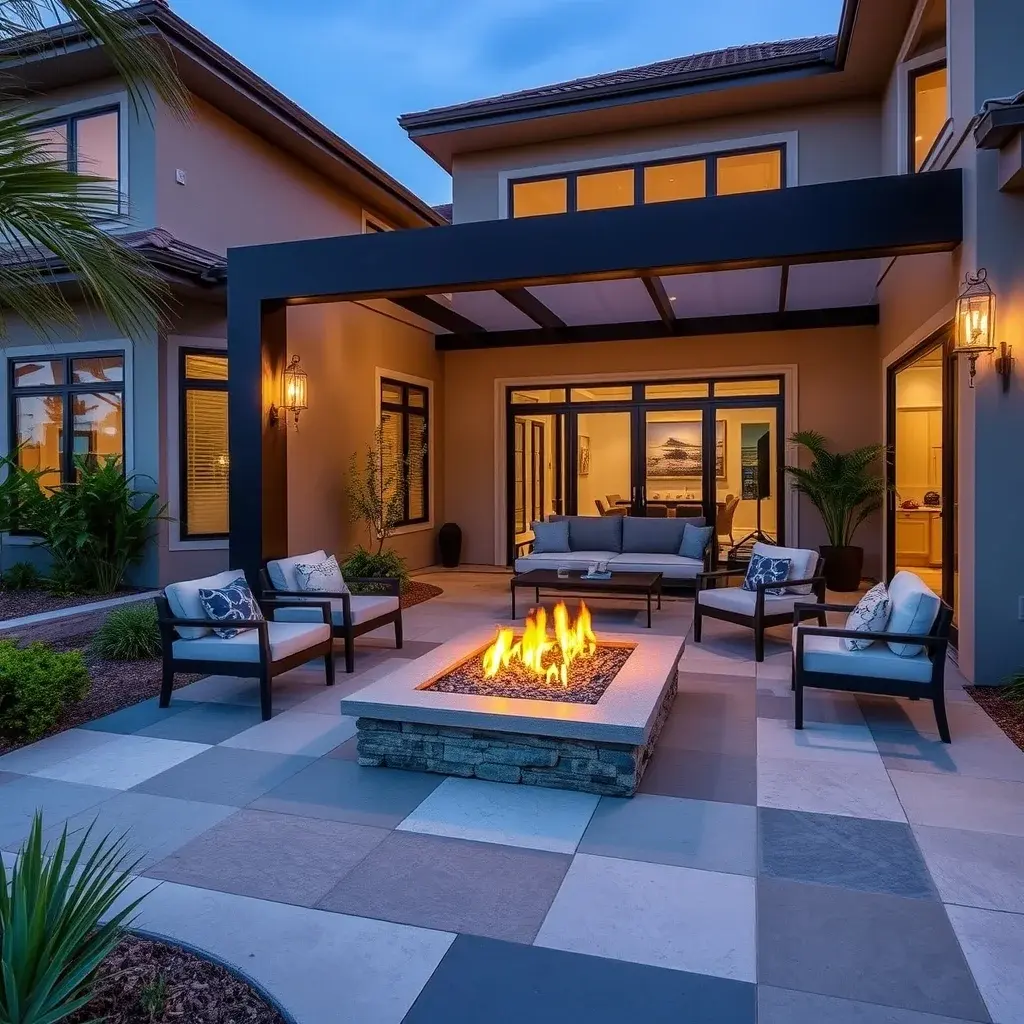
Contemporary Patios: Trends, Mixed Materials, and Design
Last updated 2026-07-30
A contemporary patio is whatever looks current right now — in 2026, that means mixed materials, seamless indoor-outdoor flow, and a blend of styles that borrows from modern, industrial, and organic design without committing to any one of them. Contemporary is a moving target. What defines it today is different from what defined it five years ago. Here is what contemporary patio design looks like now, what materials and layouts are trending, and how to build one that does not look dated the moment the trend shifts.
What Defines a Contemporary Patio
Contemporary design is defined by the present moment — it is not a historical style with fixed rules. In 2026, contemporary patios are characterized by mixed materials, clean but not sterile lines, and a strong connection between indoor and outdoor spaces. The patio is not a separate zone — it is an extension of the living room, reached through sliding glass walls that disappear into pockets.
The materials mix is the signature of current contemporary design. Rather than committing to a single surface — all concrete, all wood, all stone — contemporary patios blend two or three materials in deliberate contrast. Concrete pavers alongside ipe wood decking. A travertine border framing a stamped concrete field. Steel planters against a warm wood privacy screen. The contrasts are intentional, not accidental — each material shift defines a zone or a function.
Mixed Material Trends for 2026
The current trend is material pairing with purpose. Each material in a contemporary patio serves a specific function, and the visual contrast between them defines the zones of the space:
- Concrete or pavers for the main patio surface — durable, neutral, the anchor material.
- Wood decking for seating areas — warmer underfoot and visually, it defines the lounge zone as distinct from the dining zone.
- Steel for pergolas, edging, and planters — sharp, linear, creates definition between material zones.
- Travertine or flagstone as accent — a stone border, a fire pit surround, or a water feature base that adds natural texture to an otherwise clean palette.
The palette is neutral with one or two saturated accents — charcoal, warm gray, natural wood, and a single bold color like deep teal or rust in cushions or planters. The goal is intentional contrast, not a riot of competing finishes.
Can You Mix Patio Styles
Yes — and contemporary is the style that encourages it. A contemporary patio might use modern clean lines for the layout, rustic natural stone for the fire pit, and coastal light colors for the furniture. The risk is that mixing too many influences creates a space that reads as confused rather than curated. The solution: choose one dominant influence and borrow accents from others. A contemporary patio with modern bones and rustic accents works. A patio that is equally modern, rustic, coastal, and traditional reads as indecisive.
Modern vs Contemporary: The Difference Matters
Modern is a specific historical style — mid-century modernism, with defined materials (concrete, steel, glass) and defined principles (form follows function, no ornament). Contemporary is whatever is current. In 2026, contemporary borrows from modern but also from industrial, organic, and minimalist design. In 2036, contemporary will have moved on. Modern will not.
If you want a patio that will look the same in 20 years, build modern. If you want a patio that reflects what is happening in design right now, build contemporary — and accept that in a decade it may read as "a 2020s patio" the way a 2000s patio with stamped concrete and a built-in BBQ reads as dated today.
What Is the Cheapest Patio Style to Build
Contemporary is the most budget-flexible style because it has no fixed material requirements. A contemporary patio can be built with affordable concrete pavers and steel accents for $6,000 to $10,000, or with premium travertine and ipe decking for $15,000 to $30,000. The style is defined by the mix and the layout, not by the cost of the materials.
Traditional patios using brick are comparably affordable. Rustic patios using local flagstone fall in the middle. Mediterranean patios using terra cotta and travertine with a fountain trend toward the higher end. Contemporary can land anywhere on the spectrum.
Frequently Asked Questions
What is the difference between modern and contemporary patio design?
Modern is a fixed historical style — mid-century modernism with clean lines, concrete and steel, and no ornament. Contemporary means current — whatever is trending right now. In 2026, contemporary borrows from modern but also mixes materials and styles. A modern patio will look the same in 2046. A contemporary patio will look like it was built in the 2020s.Can you mix different patio styles?
Yes, within reason. A contemporary patio can borrow clean lines from [modern](/patios/styles/modern), natural stone from [rustic](/patios/styles/rustic), and light colors from [coastal](/patios/styles/coastal). The key is having one dominant influence and using the others as accents. A patio that tries to be equally everything reads as confused.What is the cheapest patio style to build?
Contemporary is the most budget-flexible — it has no required materials and can be built with affordable concrete pavers or premium stone at any price point. [Traditional](/patios/styles/traditional) patios using brick are comparably affordable. The cost is driven by the materials you choose, not by the style label.Contemporary Patio Builders in Your Area
Our partnered contractors handle contemporary patio design across Central and Western Florida:
- The Villages: Contemporary patio installation in The Villages
- Central Florida: Clermont patio installation · Gainesville patio installation
- Tampa Bay Coast: Clearwater patio installation · Largo patio installation
Explore other styles: Modern · Coastal · Mediterranean
Ready to Design Your Contemporary Patio?
We connect you with up to three licensed contractors who understand current design trends. Free estimates, no obligation. Call (352) 555-0194 or visit our patio installation services page.
Related reading: Modern Patios · Paver Patios · Stamped Concrete Patios · Patio Installation