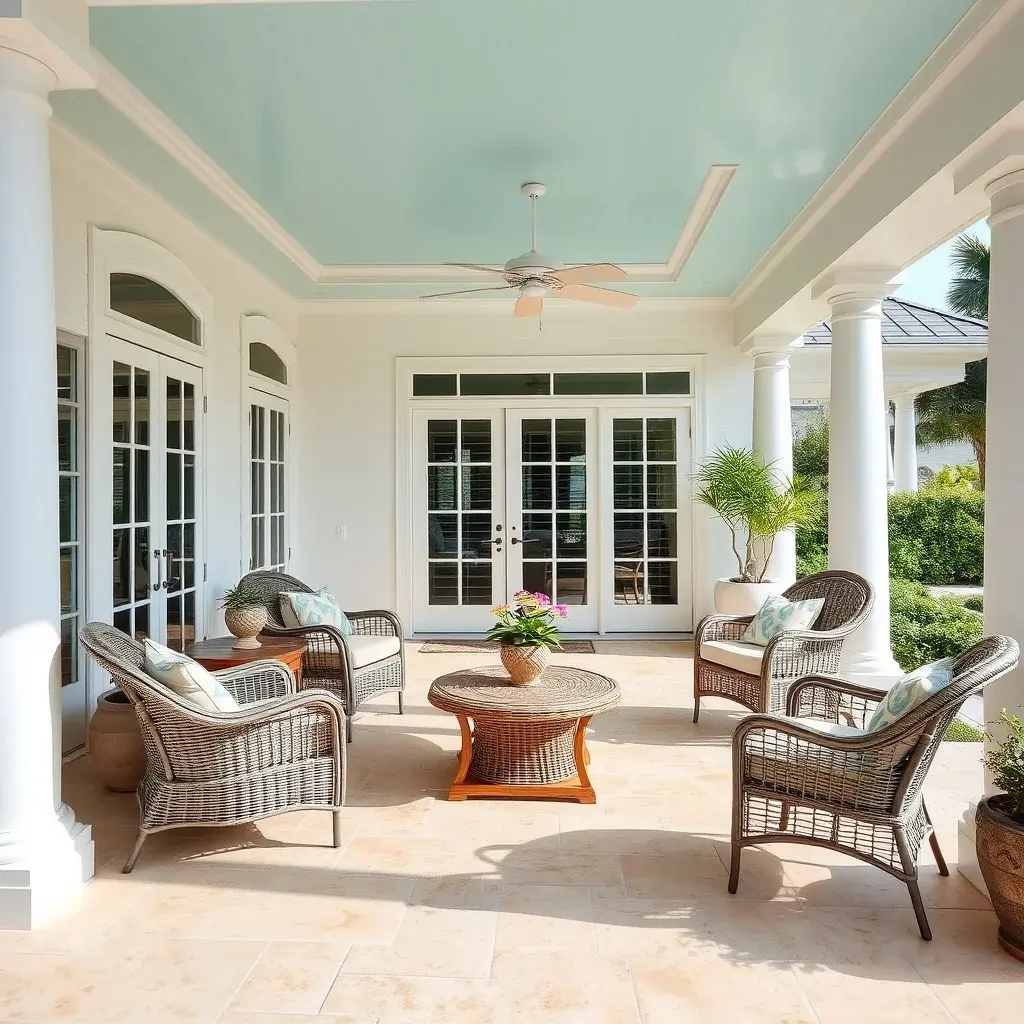
Coastal Patio Design: Style, Materials, and Decor Guide
Last updated 2026-07-30
A coastal patio captures the feeling of being near the water — light, airy, and relaxed — without the nautical kitsch of anchor motifs and ship wheels. The palette is drawn from sand, sea, and sky. The materials are chosen to survive salt air and humidity without rusting, rotting, or fading. Here is how to design a coastal patio that looks like a resort, not a themed restaurant.
What Defines a Coastal Patio
A coastal patio feels open and unstructured — the opposite of a formal traditional patio with its rigid symmetry. The furniture is arranged for conversation and lounging, not for formal dining. Deep seating with oversized cushions invites you to sink in and stay. The color palette is drawn from the beach: sand tones, sea glass blues and greens, driftwood grays, and crisp whites. Nothing dark, nothing heavy.
The key distinction: coastal style is about the feeling of the coast, not the iconography of the coast. A coastal patio does not need a anchor on the wall, a ship wheel on the fence, or a "BEACH" sign in weathered wood. Those items signal a themed space. A true coastal patio uses materials, colors, and textures that evoke the shore without literally depicting it.
How to Make Your Patio Look Coastal
Start with the floor. Travertine in ivory or light beige is the ideal coastal paver — it stays cool underfoot, handles salt air and humidity without corroding, and the natural stone texture reads as organic rather than manufactured. If travertine exceeds the budget, light-colored concrete pavers in a sand tone or a stamped concrete patio with a light integral color achieve a similar effect.
For the roof structure, a whitewashed wood pergola with retractable shade cloth provides filtered light and the sense of an open cabana. If you are building a covered patio, choose an insulated panel roof in white — it reflects heat and reads as clean and bright rather than heavy.
Best Materials for Salt Air and Humidity
Materials near the coast take a beating. Salt air corrodes unprotected steel within months. Humidity rots untreated wood. UV exposure fades fabrics in a single season. Choose materials that are built for the environment:
- Travertine pavers — naturally salt-resistant, stays cool, does not corrode. The best patio surface for coastal properties.
- Powder-coated aluminum furniture — will not rust. Lighter than wrought iron and more comfortable in the heat. Look for marine-grade powder coating.
- Teak — naturally oily wood that resists rot and insects. Weathers to a silver-gray patina if left untreated. Whitewash it for a brighter coastal look.
- Sunbrella or solution-dyed acrylic fabrics — fade-resistant, mold-resistant, and designed for outdoor exposure. Standard outdoor cushions fade in one season within sight of salt water.
- Stainless steel hardware — grade 316 marine stainless. Standard stainless steel (grade 304) will still pit and rust in coastal air.
Colors and Decor That Work
The coastal palette: ivory, sand, seafoam green, pale blue, driftwood gray, and white. Use white as the base — white cushions, white pergola, white planter boxes — and layer in the blues and greens through pillows, umbrellas, and ceramic accents. The effect should feel light and breezy, not themed.
For decor, stick to natural textures: rope-wrapped lamp bases, driftwood centerpieces, linen throw pillows, glass lanterns with candles. Plants should be tropical but restrained — palms and ferns, not a jungle. The goal is a space that feels like a resort lounge, not a tiki bar.
Frequently Asked Questions
How do I make my patio look coastal?
Use light-colored [travertine](/patios/types/travertine) or sand-tone pavers as the floor. Choose whitewashed teak or powder-coated aluminum furniture with white or pale blue cushions. Add rope and linen accents. Skip nautical kitsch — anchors, ship wheels, and "BEACH" signs make it feel themed rather than coastal. The palette should be sand, sea glass, and white.What materials hold up best in salt air?
Travertine pavers, grade 316 stainless steel hardware, powder-coated aluminum furniture, teak, and Sunbrella fabrics. Avoid unprotected steel, standard stainless (grade 304), untreated wood, and standard outdoor cushions — all degrade rapidly in coastal conditions. Expect to spend 15 to 30 percent more on coastal-rated materials compared to inland-grade equivalents.What is the difference between coastal and Mediterranean patio style?
Coastal is breezy, light, and relaxed — drawn from Atlantic and Gulf Coast beach houses. Mediterranean is warm, earthy, and old-world — drawn from Italian, Spanish, and Greek courtyards. Coastal uses whites and pale blues. Mediterranean uses terra cotta, ochre, and deep blue. Coastal uses teak and rope. Mediterranean uses wrought iron and tile.Coastal Patio Builders in Your Area
Our partnered contractors handle coastal patio design across Central and Western Florida:
- The Villages: Coastal patio installation in The Villages
- Central Florida: Clermont patio installation · Gainesville patio installation
- Tampa Bay Coast: Clearwater patio installation · Largo patio installation
Explore other styles: Mediterranean · Contemporary · Modern
Ready to Design Your Coastal Patio?
We connect you with up to three licensed contractors experienced with coastal materials. Free estimates, no obligation. Call (352) 555-0194 or visit our patio installation services page.
Related reading: Travertine Patios · Covered Patios · Patio Installation