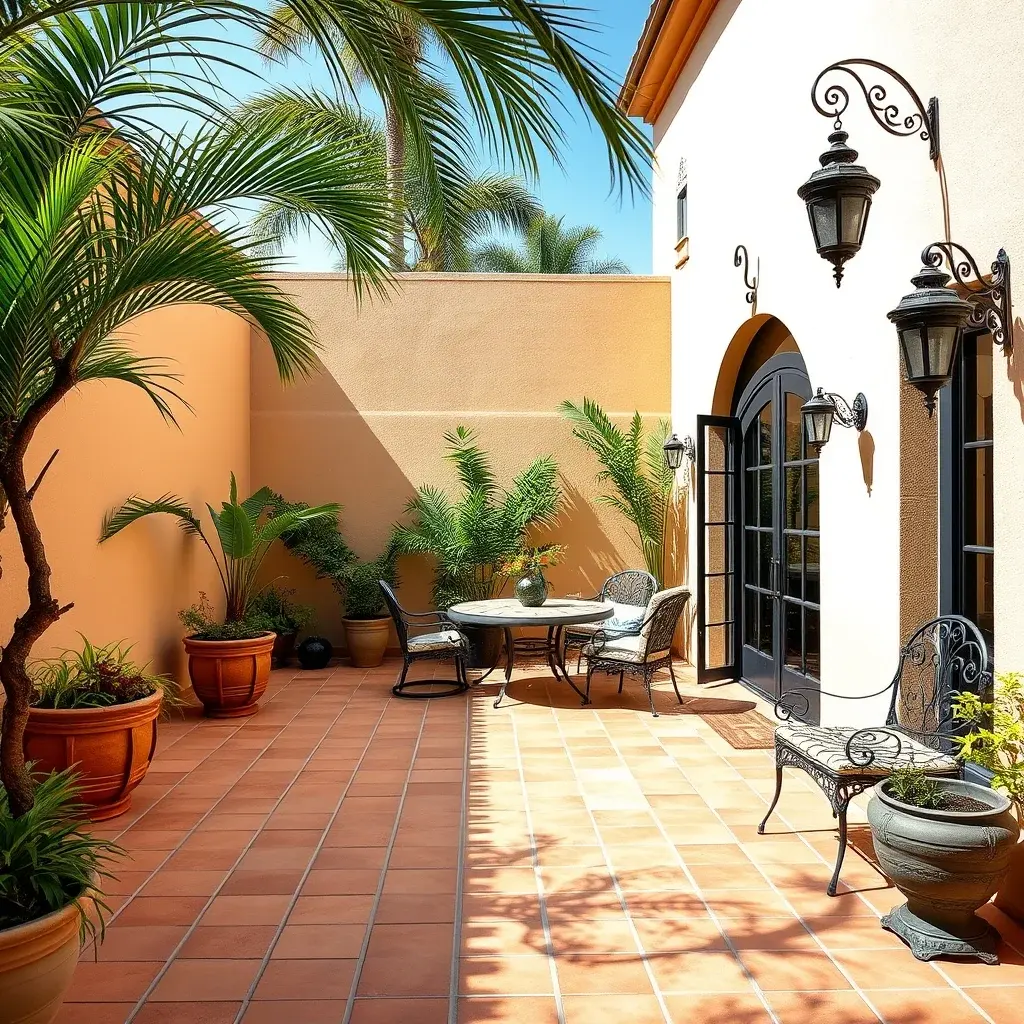
Mediterranean Patio: Terra Cotta, Stone, and Design
Last updated 2026-07-30
A Mediterranean patio feels like a courtyard in Tuscany or a terrace overlooking the Aegean — warm stone, terra cotta, wrought iron, and the sound of water from a central fountain. It is one of the oldest patio traditions in the world and still one of the most desirable. The materials, colors, and proportions have not changed in centuries because they work. Here is what defines a Mediterranean patio and how to build one.
What Is a Mediterranean Style Patio
Mediterranean patio design draws from the outdoor living traditions of Italy, Spain, Greece, and the broader Mediterranean coast. The patio is not an add-on to the house — it is a room without a roof, treated with the same importance as any interior space. Enclosing walls — stucco, stone, or clipped hedges — define the boundaries and create a sense of enclosure and privacy.
The floor is typically terra cotta tile or travertine — warm-toned natural materials that feel cool underfoot in the shade and radiate warmth as the evening cools. A central water feature — a fountain, a tiered basin, or a simple water wall — provides the sound of moving water, which masks street noise and creates the sense of an oasis. Wrought iron furniture, ceramic planters, and climbing vines complete the look.
Materials and Colors
The Mediterranean palette is warm and saturated: terra cotta, ochre, deep blue, olive green, and warm white stucco. Blue appears as accent — ceramic tiles, fountain basins, cushion fabrics — against the dominant warm earth tones. The white is never bright white — it is warm white, cream, or the natural color of limestone stucco.
Materials are chosen for their ability to handle heat and sun without degrading. Terra cotta and travertine stay cooler than concrete. Wrought iron is traditional but requires maintenance in humid or coastal climates — powder-coated aluminum in a bronze or oil-rubbed finish achieves the same look without the rust risk. Stucco walls should be through-colored so chips and cracks do not expose a different substrate.
Water Features and the Central Focal Point
A Mediterranean patio is organized around a central feature — almost always water. A tiered fountain in the center of the patio. A water wall on the back wall with water sheeting down a textured stone surface. A reflecting basin flush with the patio surface that mirrors the sky. The sound of water is as important as the visual — it provides a constant, calming background that masks traffic, neighbors, and the hum of air conditioning.
The fountain does not need to be large. A three-tier cast stone fountain 4 feet tall and 3 feet wide is enough to anchor a 300-square-foot patio. The scale should match the space — a fountain that is too small reads as an afterthought. One that is too large overwhelms the seating area.
Frequently Asked Questions
What is a Mediterranean style patio?
A patio built with warm, natural materials — terra cotta or travertine flooring, stucco or stone walls, wrought iron furniture — organized around a central water feature. The style draws from Italian, Spanish, and Greek courtyard traditions. It is defined by warmth, enclosure, and the sound of water.What patio style adds the most value to a home?
[Traditional](/patios/styles/traditional) and [Mediterranean](/patios/styles/mediterranean) patios consistently add the most resale value. Both are timeless — they do not rely on trends that will date the home in 10 years. Mediterranean patios are particularly valuable on homes with Spanish, Tuscan, or mission-style architecture where the patio extends the architectural language of the house.What is the difference between Mediterranean and coastal patio style?
Mediterranean is warm, earthy, and enclosed — terra cotta, ochre, deep blue, wrought iron, central fountain. [Coastal](/patios/styles/coastal) is light, breezy, and open — sand tones, pale blue, whitewashed wood, rope accents. Mediterranean draws from Italian and Spanish courtyards. Coastal draws from Atlantic and Gulf beach houses. Mediterranean feels like Tuscany. Coastal feels like the Hamptons.Mediterranean Patio Builders in Your Area
Our partnered contractors handle Mediterranean patio design across Central and Western Florida:
- The Villages: Mediterranean patio installation in The Villages
- Central Florida: Clermont patio installation · Gainesville patio installation
- Tampa Bay Coast: Clearwater patio installation · Largo patio installation
Explore other styles: Coastal · Traditional · Rustic
Ready to Build Your Mediterranean Patio?
We connect you with up to three licensed contractors experienced with Mediterranean design. Free estimates, no obligation. Call (352) 555-0194 or visit our patio installation services page.
Related reading: Travertine Patios · Paver Patios · Patio Installation