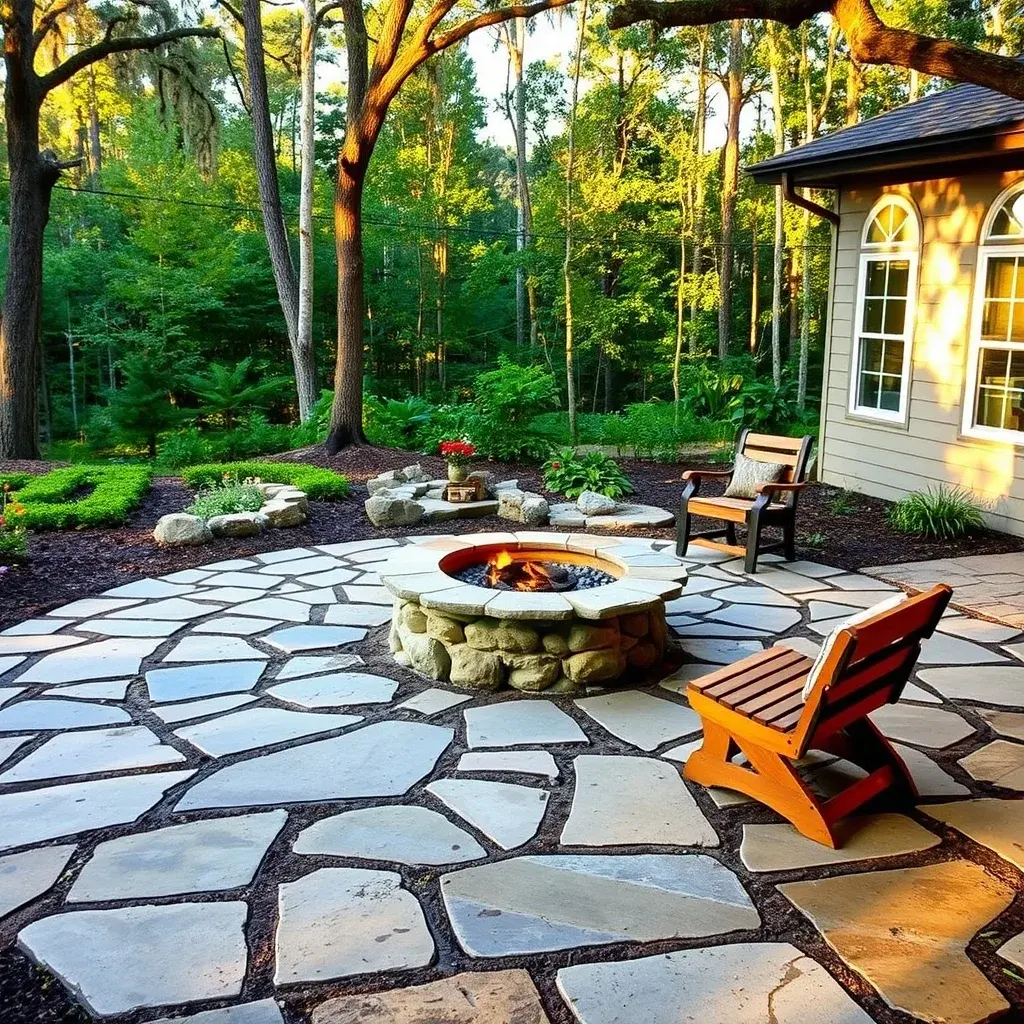
Rustic Patio: Natural Materials, Fire Pits, and Design
Last updated 2026-07-30
A rustic patio feels like it grew out of the ground — rough stone, heavy timber, weathered finishes, and a fire pit at the center. It is the opposite of a modern patio. Where modern is clean and precise, rustic is textured and forgiving. Imperfection is the point. Here is what defines a rustic patio, what materials and colors to use, and how it differs from farmhouse and traditional styles.
What Defines a Rustic Patio
Rustic design is about materials in their natural state. Stone is left rough-edged rather than cut square. Wood is heavy timber with saw marks and checking — not planed smooth, not painted, not stained to hide the grain. Metal is forged iron or raw steel left to develop a natural patina, not powder-coated or polished.
The layout is organic rather than geometric. The patio does not need to be a perfect rectangle. Irregular flagstone set in sand follows the natural contours of the yard. A fire pit at the center — built from the same stone as the patio — is the natural gathering point. This is not the patio for a built-in outdoor kitchen with stainless appliances. It is the patio for a stone fire ring, Adirondack chairs, and string lights overhead.
What Colors Work for a Rustic Patio
The rustic palette is drawn from the forest floor and the mountains: warm browns, rust, ochre, charcoal, sage green, and weathered gray. No bright white — it reads as too clean. No black — it reads as too industrial. Colors should look faded, as if they have been in the sun for 20 years even if the patio was built last month.
Stone should be local when possible. A rustic patio in the northeast might use bluestone or fieldstone. In Florida, limestone and sandstone in earth tones read as natural to the region. Imported stone in colors that do not exist in local geology looks out of place in a rustic setting — the whole point is that the patio belongs to its location.
Rustic vs Farmhouse: What Is the Difference
This distinction matters because the two terms are often used interchangeably. They are not the same.
Rustic is raw and natural. A rustic patio uses materials as they come from the earth — rough stone, heavy timber, forged iron. The aesthetic is cabin, lodge, and mountain retreat. Imperfection is the point.
Farmhouse is nostalgic and curated. A farmhouse patio uses painted wood, galvanized metal, enamelware accents, and vintage-style signage. The aesthetic is country living, farmers markets, and Joanna Gaines. It is more decorated, more intentional, and more polished than rustic — even though both use natural materials.
A traditional patio is more formal than either — brick, symmetry, classic wrought iron. Rustic and farmhouse both reject the formality of traditional design, but they reject it in different directions: rustic toward raw nature, farmhouse toward curated nostalgia.
Fire Features and Lighting
A fire pit is the centerpiece of a rustic patio — not a gas fire table with glass beads, but a real wood-burning stone fire ring or a heavy steel bowl on a stone base. The fire should be the visual anchor that furniture arranges around. Adirondack chairs in cedar or teak — left natural, not painted — face the fire.
Lighting should be warm and ambient: string lights on a dimmer, lanterns with candles, and low-voltage path lights tucked into the landscaping. Nothing bright white, nothing cool-temperature LED. The light should feel like firelight, even when it is electric.
Frequently Asked Questions
What is the difference between rustic and farmhouse style?
Rustic is raw and natural — rough stone, heavy timber, forged iron, minimal decoration. Farmhouse is curated and nostalgic — painted wood, galvanized metal, vintage accents, more decorated. Rustic looks like a mountain lodge. Farmhouse looks like a country cottage.What colors work for a rustic patio?
Earthy, warm, and faded: browns, rust, ochre, charcoal, sage green, weathered gray. Avoid bright white and black — they read as too clean and too industrial for a rustic setting. Colors should look like they have been in the sun for years, even on a new patio.What is the best stone for a rustic patio?
Irregular [flagstone](/patios/types/flagstone) — sandstone, limestone, or fieldstone — set in sand with wide joints. The stone should be locally sourced when possible so the colors belong to the region. Imported stone in colors that do not exist locally looks out of place in a rustic setting.Rustic Patio Builders in Your Area
Our partnered contractors handle rustic patio design across Central and Western Florida:
- The Villages: Rustic patio installation in The Villages
- Central Florida: Clermont patio installation · Gainesville patio installation
- Tampa Bay Coast: Clearwater patio installation · Largo patio installation
Explore other styles: Traditional · Mediterranean · Coastal
Ready to Build Your Rustic Patio?
We connect you with up to three licensed contractors experienced with natural stone and timber. Free estimates, no obligation. Call (352) 555-0194 or visit our patio installation services page.
Related reading: Flagstone Patios · Paver Patios · Patio Installation