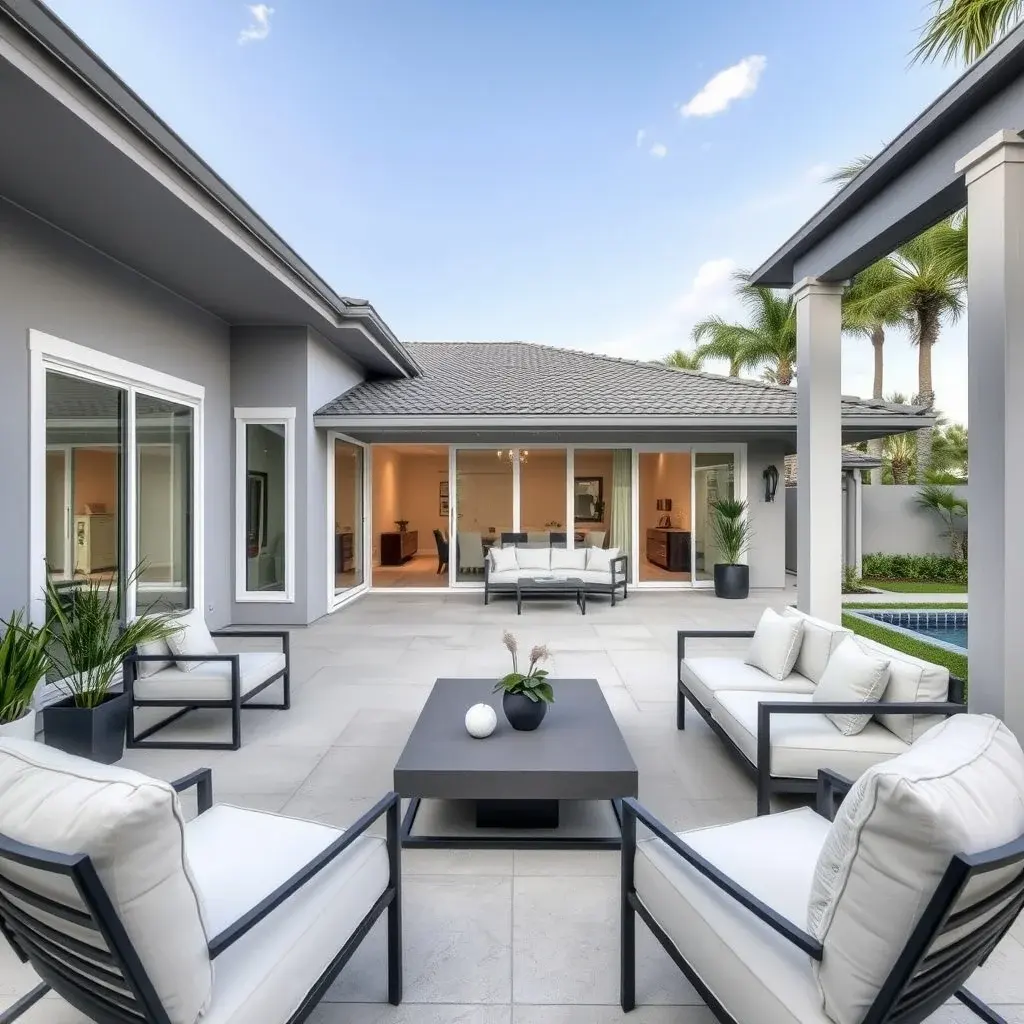
Modern Patio Design: Clean Lines, Materials, and Ideas
Last updated 2026-07-30
A modern patio is defined by what it leaves out — no ornate details, no busy patterns, no clutter. Clean lines, geometric shapes, and a restrained material palette do the work. It pairs best with mid-century, minimalist, and contemporary architecture where the patio reads as an extension of the home's design language rather than a separate outdoor zone. Here is what defines a modern patio, what materials and colors to use, and how it differs from contemporary style.
What Defines a Modern Patio
Modern design emerged from the mid-20th century modernist movement — think Frank Lloyd Wright, Mies van der Rohe, and the Case Study Houses in California. The principles are the same whether applied to architecture or a patio: form follows function, ornament is unnecessary, and the materials should be honest — concrete looks like concrete, steel looks like steel.
A modern patio has straight lines, right angles, and geometric shapes. The layout is linear — rectangular seating areas, long narrow planters, and paving patterns that run in straight bands rather than curves. There is no clutter. Each piece of furniture, each planter, each light fixture earns its place or it is not there. If a traditional patio accumulates, a modern patio curates.
Best Materials for a Modern Patio
Modern patios favor materials that read as industrial or architectural: large-format concrete pavers in gray or charcoal, stamped concrete with a linear wood-grain or ashlar pattern, and smooth-troweled concrete slabs. Flagstone and irregular natural stone are too organic for a modern patio — they belong in a rustic or traditional setting.
Steel is the defining accent material. A steel-frame pergola, powder-coated black or left to develop a natural rust patina, creates the sharp lines and defined edges that modern design requires. Steel planters, steel edging, and steel-framed furniture carry the material language through the space. Wood appears as accent, not as the primary surface — a slatted ipe bench or a horizontal cedar privacy screen, always in straight lines.
Travertine can work in a modern patio if you choose honed travertine in a consistent light color with the pits filled. The natural variation in tumbled travertine reads as rustic. Honed travertine with a uniform surface reads as refined.
Colors and Layout
The modern palette is neutral: concrete gray, charcoal, white, black, and natural wood as the warm accent. If you add color, add it once — a single cobalt blue planter or a rust-red steel privacy screen, not a mix of hues. Modern design uses color as punctuation, not as vocabulary.
The layout follows the architecture. If your home has strong horizontal lines, the patio paving should run parallel to the house in long bands. If your home has a grid pattern of windows, the patio should echo that grid in paver layout or planter placement. The patio should look like it was drawn on the same blueprint as the house.
Modern vs Contemporary: What Is the Difference
This is the most common confusion in patio design. Modern is a specific historical style — mid-century modernism, with defined principles and a consistent visual language. A modern patio looks like a modern patio regardless of the decade.
Contemporary means "current" — whatever design trends are popular right now. A contemporary patio in 2026 looks different from a contemporary patio in 2016. Contemporary borrows from modern, from industrial, from minimalist, and from whatever else is trending. It is a moving target. Modern is fixed.
Are Modern Patios Expensive
The materials themselves are not more expensive than other styles — concrete pavers and steel accents cost roughly the same as brick or natural stone. What costs more is the precision. A modern patio with poorly aligned paver joints, uneven concrete, or a pergola that is 2 inches out of square looks worse than a rustic patio with natural irregularity. The rustic patio can hide imperfection in its organic texture. The modern patio exposes it. Hire a contractor who understands that the tolerances are tighter and the margin for error is smaller.
Frequently Asked Questions
What materials are best for a modern patio?
Large-format concrete pavers, smooth-troweled concrete slabs, and [stamped concrete](/patios/types/stamped-concrete) with linear patterns. Steel for pergolas, edging, and planters. Honed [travertine](/patios/types/travertine) in consistent light tones. Avoid irregular flagstone, tumbled textures, and anything that reads as rustic or organic.What is the difference between modern and contemporary patio design?
Modern is a specific historical style with fixed principles — clean lines, neutral palette, form follows function. Contemporary means whatever is currently trending — it changes with time. A modern patio is always modern. A contemporary patio is whatever looks current in the year it was built.Are modern patios expensive to build?
The materials are not more expensive than other styles, but the labor can be. Modern design requires precise alignment and clean execution — poorly laid pavers or uneven concrete are more visible in a modern setting than in a rustic one. Budget for a contractor who understands that the tolerances are tighter.Modern Patio Builders in Your Area
Our partnered contractors handle modern patio design across Central and Western Florida:
- The Villages: Modern patio installation in The Villages
- Central Florida: Clermont patio installation · Gainesville patio installation
- Tampa Bay Coast: Clearwater patio installation · Largo patio installation
Explore other styles: Contemporary · Traditional · Mediterranean
Ready to Design Your Modern Patio?
We connect you with up to three licensed contractors who understand modern design. Free estimates, no obligation. Call (352) 555-0194 or visit our patio installation services page.
Related reading: Stamped Concrete Patios · Paver Patios · Contemporary Patios · Patio Installation