Pool Removal: Methods, Cost, Permits, and What Happens After
Last updated 2026-07-30
Removing a pool is the only pool project that subtracts rather than adds — and for some homeowners, it is the right decision. An old pool that costs thousands a year to maintain, that no one uses, that takes up the best part of the yard, or that has structural problems too expensive to repair — removing it frees up the space for something else. Here is how pool removal works, what it costs, and what you can do with the space afterward.
Partial vs Full Pool Removal
Partial Removal (Abandonment)
Partial removal — also called pool abandonment — is the most common method. The top 2 to 3 feet of the pool shell are broken up and pushed into the bottom of the pool. The remaining shell floor is punched with drainage holes so water cannot collect underneath. The hole is then backfilled with clean fill dirt, compacted in lifts, and topped with topsoil. The pool no longer exists as a functional structure, and the space becomes a lawn or garden area.
Partial removal costs $3,000 to $8,000 and takes 3 to 5 days. It satisfies demolition permit requirements in most jurisdictions. The limitation: you cannot build a structure on top of a partially removed pool. The buried shell is not engineered to support a building foundation. If you plan to build a home addition, garage, or any structure on the site, you need full removal.
Full Removal (Complete Excavation)
Full removal excavates the entire pool shell — concrete, rebar, plumbing, and all — down to the original soil. Nothing is left buried. The hole is backfilled with engineered fill, compacted, and tested for bearing capacity. A structural engineer certifies that the soil can support future construction.
Full removal costs $7,000 to $20,000 — more than double partial removal — because of the additional excavation, debris hauling, and engineering requirements. It takes 1 to 2 weeks. Full removal is required if you plan to build on the site, if local code mandates it, or if you want the property to have no record of a buried pool for future sale disclosure purposes.
How Much Does Pool Removal Cost
| Item | Partial Removal | Full Removal |
|---|---|---|
| Demolition permit | $200–$500 | $200–$500 |
| Shell demolition | $2,000–$5,000 | $5,000–$12,000 |
| Debris hauling | $500–$1,500 | $1,500–$4,000 |
| Backfill and compaction | $1,000–$2,500 | $1,500–$3,500 |
| Engineering certification | Not required | $500–$1,500 |
| Total | $3,000–$8,000 | $7,000–$20,000 |
Cost varies by pool size, access for demolition equipment, and local disposal fees. A pool in a backyard with no equipment access — requiring hand demolition or a small excavator — costs more than a pool with a clear drive path for a full-size machine. Soil type also matters: sandy soil compacts more easily than clay, which may require additional fill or longer compaction time.
The Pool Removal Process
Demolition
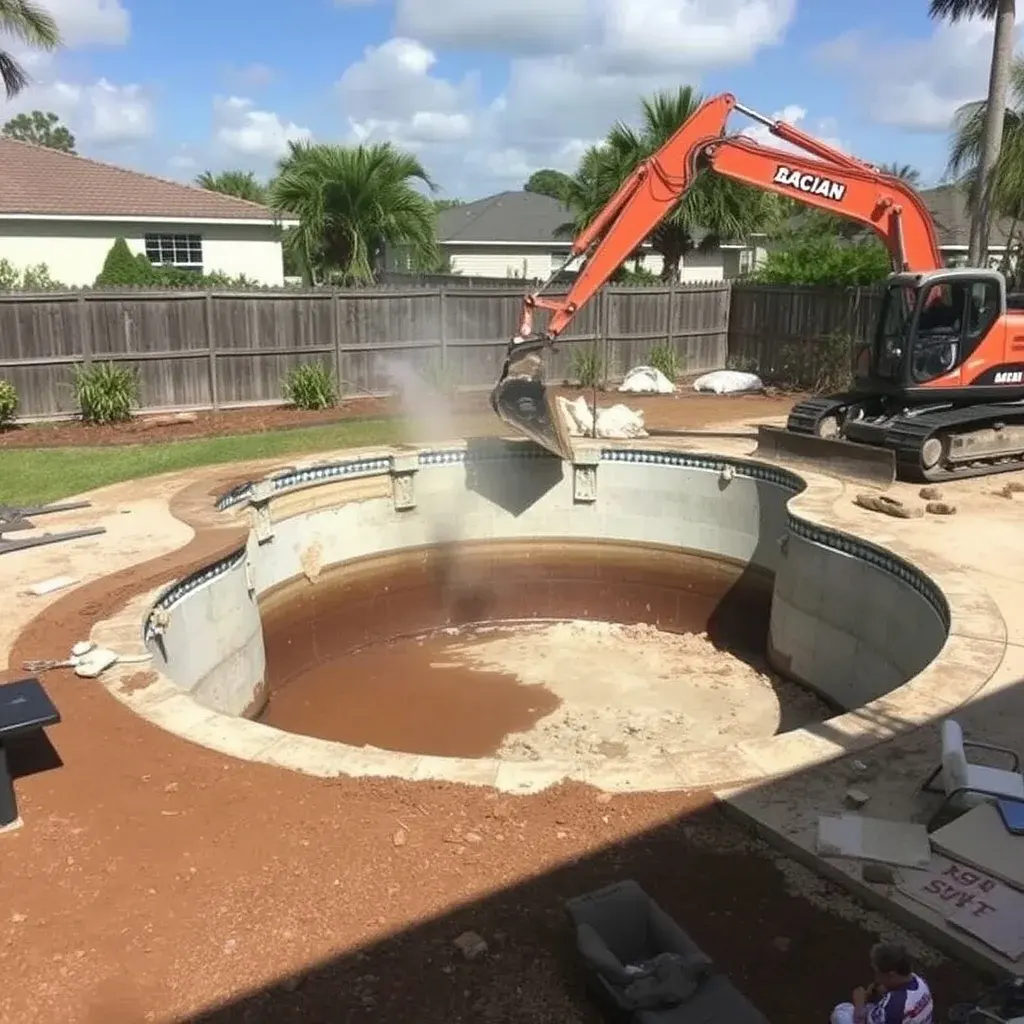
The pool is drained. For concrete pools, a hydraulic breaker attached to an excavator breaks the shell into manageable pieces. For fiberglass pools, the shell is cut into sections with a saw and lifted out. For vinyl liner pools, the liner is removed, the wall panels are unbolted, and the sand floor is excavated. Demolition takes 1 to 3 days depending on pool type and size.
Backfill and Compaction
The hole is filled with clean fill dirt — not construction debris, not topsoil, not organic material. The fill is placed in 12-inch lifts and compacted with a mechanical tamper between each lift. Proper compaction prevents settling, which would create a depression in the yard within months of backfill. For full removal, a compaction test verifies the soil density meets the engineering specification.
Final Grading and Restoration
The backfilled area is graded to match the surrounding yard, topped with topsoil, and seeded or sodded. If you plan to build a patio or deck over the site, the base preparation happens at this stage.
Permits Required
A demolition permit is required for pool removal in virtually every municipality. The permit ensures the work meets local codes for demolition, debris disposal, and backfill compaction. For full removal, most jurisdictions also require a structural engineer's certification that the backfill can support future construction. Your contractor should pull all permits — confirm this is included in the contract.
Some municipalities require a site inspection after backfill but before final grading to verify proper compaction. If an inspection is missed, you may have to expose the backfill for the inspector to verify — an expensive and avoidable delay.
What to Do with the Space After Removal
A lawn or garden is the simplest option — grade, seed, and the pool site becomes part of the yard. A paver patio or stamped concrete patio turns the former pool footprint into usable outdoor living space. A covered patio with a roof structure creates year-round shade. If you did a full removal, you can build a home addition, garage, or accessory dwelling unit on the site.
Keep the demolition permit and engineering certification — they are part of your property records. When you sell the home, you may need to disclose that a pool was removed and provide documentation that it was done properly. A partial removal with proper permits and compaction does not negatively affect property value. An undocumented removal — or one where the shell was simply pushed into the hole with no drainage — can become a liability during a sale.
Frequently Asked Questions
How much does it cost to remove a pool?
Partial removal: $3,000 to $8,000. Full removal: $7,000 to $20,000. The difference is whether the entire shell is excavated or left buried under properly compacted fill. Partial removal is adequate for lawn or garden use. Full removal is required for building on the site.Can I remove a pool myself?
No. Demolition requires heavy equipment — excavators, hydraulic breakers, and debris hauling trucks. Permits require licensed contractors. Backfill compaction requires mechanical tampers and engineering verification. This is not a DIY project. Hiring an unlicensed operator to "just break it up and fill the hole" creates a liability that will surface when you try to sell the property.Does removing a pool decrease home value?
It depends on your market. In neighborhoods where most homes have pools, removing one can make your home harder to sell. In neighborhoods where pools are rare or undesirable, removing an old, high-maintenance pool can increase value by reclaiming usable yard space. The age and condition of the pool matter more than the presence or absence of one — a cracked, leaking pool that needs $10,000 in repairs hurts value more than a properly removed one.Pool Removal Services in Your Area
Our partnered contractors handle permitted pool demolition and removal across Central and Western Florida:
- The Villages: Pool removal in The Villages
- Central Florida: Clermont pool removal · Gainesville pool removal
- Tampa Bay Coast: Clearwater pool removal · Largo pool removal
Related services: Pool Remodeling · Pool Repair · Patio Installation
Considering Pool Removal?
We connect you with up to three licensed demolition contractors who handle permitted pool removal. Free estimates, no obligation. Call (352) 555-0194 or visit our pool removal services page.
Related reading: Pool Remodeling · Paver Patios · Stamped Concrete Patios