Hurricane Pool Prep Checklist: Protect Your Florida Pool (2026)
Last updated 2026-08-23
Hurricane pool prep is not complicated, but the wrong moves are expensive. A Florida pool that is handled correctly before a storm usually comes through fine. A pool that gets drained, covered with a loose tarp, or left running during a power surge can turn into a five-figure problem. This checklist follows the guidance the Florida Swimming Pool Association gives its members, adapted for the screen enclosures, high water tables, and salt air that make Florida pools different from pools anywhere else.
Hurricane season runs June 1 through November 30. The work below takes about one to two hours, and most of it you can do yourself. The goal before the storm is simple: keep the pool full, shut off the electricity, clear anything that can fly, and super-chlorinate so the water survives a power outage.
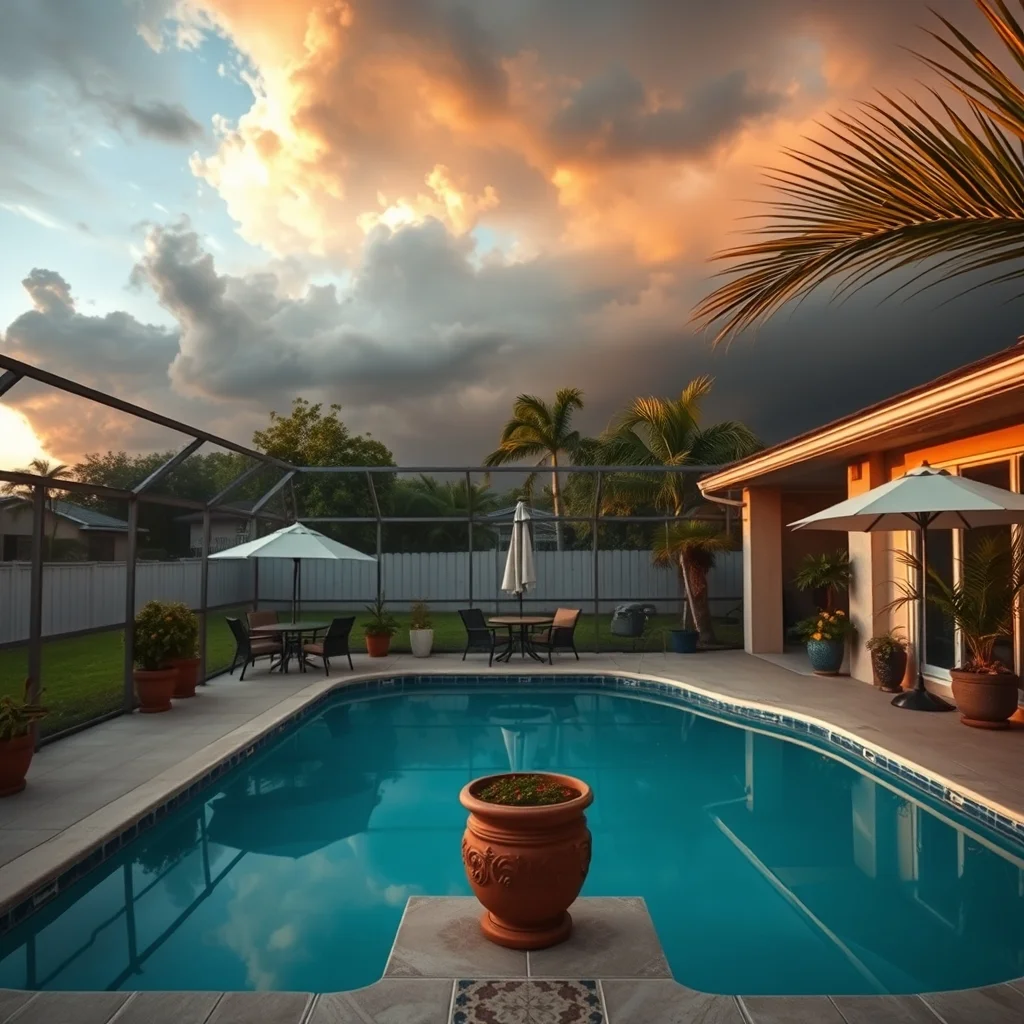
Why you should never drain your pool before a hurricane
Keep the pool full. This is the single most important rule, and it is the one most homeowners get backwards.
Florida sits on a high water table. When a hurricane dumps heavy rain, the groundwater around the pool rises. If the pool is full, the water inside pushes back against that groundwater pressure and holds the shell in place. If the pool is empty, there is nothing holding it down, and the hydrostatic pressure from the saturated ground can lift the entire structure out of its hole — what pool contractors call "popping" a pool. A popped pool is a total loss and costs far more to repair than anything you were trying to prevent by draining it.
The same logic applies after the storm. Even if the water is murky, do not drain it to clean it. Debris and dirty water are a cleaning job. A floated pool shell is a structural failure. If you are ever unsure whether it is safe to lower the water level, ask a licensed pool professional before you pull the plug.
How to prepare your pool for a hurricane: the before-storm checklist
Work through these in order, ideally a day or two before the storm is expected to make landfall.
| # | Task | Why it matters |
|---|---|---|
| 1 | Keep the pool full | Water weight counteracts hydrostatic pressure and prevents the shell from floating |
| 2 | Super-chlorinate (shock) the water | A power outage stops the pump; extra chlorine keeps algae and bacteria in check while the water sits still |
| 3 | Trim nearby trees and shrubs | Falling branches are the most common source of storm debris in pools |
| 4 | Remove solar covers and automatic covers | Wind gets under loose covers, tears them, and turns them into sails |
| 5 | Secure or store deck furniture, umbrellas, and toys | Loose items become windborne debris that punctures screen enclosures and pool surfaces |
| 6 | Tighten skimmer lids | Loose lids are small projectiles that damage the skimmer throat |
| 7 | Turn off the pool equipment at the breaker | Protects pump motors, heaters, chlorinators, and lighting from power surges |
| 8 | Sandbag low-lying equipment if you flood easily | Keeps the pump and filter from sitting in standing water |
Add the shock treatment 24 to 48 hours ahead so the chlorine has time to circulate while the pump still works. Brush the walls and vacuum first if you can — organic debris consumes chlorine, so a clean pool holds its shock dose longer through an outage.
What to do with your screen enclosure and patio furniture
Most Florida pools sit inside an aluminum screen enclosure, and that structure is the most vulnerable part of your backyard in high wind. The frame is engineered to shed screen panels under extreme pressure so the structure does not collapse — which means you should expect some torn screens after a strong storm. That is the system working, not failing.
Here is how to limit the damage:
- Remove anything hanging on the enclosure — hanging chairs, plants, decorations.
- Do not try to brace or tie down the screen cage. Let it do what it was designed to do.
- If your patio furniture cannot fit indoors, the FSPA says you may gently place cushions and light pieces in the pool so they cannot fly. Just know the chemicals can damage the fabric and you must remove them promptly afterward to avoid scratching the finish.
- Bring in anything with sails — umbrellas, shade canopies, trampolines. These catch the most wind.
After the storm, a torn screen or bent frame is a repair job. We can connect you with a licensed contractor who handles screen enclosure and pool repair in your area so you are not calling strangers off a search page when the whole neighborhood needs the same help at once. For cracks, leaks, or equipment failures unrelated to screens, the pool repair guide covers what each fix typically costs.
During the storm
Stay indoors and stay out of the pool. Do not go outside to secure something you forgot, check the water level, or move furniture once the winds are up. At hurricane force, loose objects are dangerous and the pool deck is the wrong place to be. If a tornado warning is issued, move to your safe room. The pool will be there afterward — you need to be there too.
After the storm: cleanup and restart
Once it is safe to go outside, work slowly and treat everything electrical as live until you have confirmed it is dry.
| Step | What to do | Caution |
|---|---|---|
| 1 | Inspect before touching | Confirm the equipment pad, wiring, and breakers are dry before you reconnect anything |
| 2 | Remove large debris by hand | Use a deep net. Do not let branches get sucked into the pump, and do not drag heavy objects across the finish |
| 3 | Check the pump and filter | If the equipment was flooded, it needs repair before it runs. A flooded motor will burn out if you force it |
| 4 | Restore power carefully | Turn the breaker back on only when everything is dry; reset clocks and timers |
| 5 | Test and balance the water | Storm water dilutes chemistry. Test, rebalance, and shock again if needed |
| 6 | Bring the water level back down | If rain overfilled the pool, lower it to the normal level once the ground has had time to drain |
If you cannot see the bottom of the pool, that is the point where this stops being a DIY job. Cloudy, debris-filled water that you cannot see through usually means the filter needs attention and the chemistry is far enough off that guessing makes it worse.
When to call a licensed pool contractor after a storm
Call a licensed Florida pool contractor when the pump will not start, when any wiring or the breaker panel got wet, when you cannot see the bottom of the pool, or when the shell, tile, or deck shows cracking or movement. In Florida, pool repair has to be performed by a licensed contractor — you can verify a license at myfloridalicense.com before you hire. Ask specifically whether their liability insurance covers pool damage from draining, because that is a separate rider and it matters if a repair ever requires lowering the water.
A good contractor will walk the property with you, point out what is storm damage versus what was already wearing, and give you a written scope before starting work. If someone shows up the day after a storm asking for cash up front with no written estimate, that is a red flag.
Frequently Asked Questions
Should I drain my pool before a hurricane?
No. Keep it full. The water's weight holds the shell against the rising groundwater. An empty pool can float or "pop" out of the ground, which is a total loss.Should I cover my pool before a hurricane?
Remove solar covers and automatic covers before the storm. Wind gets underneath them and tears them loose. A pool left open and full is easier to recover than one under a loose cover.Do I need to turn off my pool pump before a hurricane?
Yes. Shut the pool equipment off at the circuit breaker to protect the pump motor, heater, chlorinator, and lighting from power surges when the grid goes down and comes back up.How much chlorine do I add before a storm?
Shock the pool to a high chlorine level 24 to 48 hours before landfall so it circulates while the pump still runs. This keeps algae down during the outage when the pump cannot run.What do I do with patio furniture I cannot bring inside?
The FSPA allows you to gently place cushions and light furniture in the pool so they cannot become projectiles. Remove them as soon as it is safe, since pool chemicals can damage fabric and dragging items can scratch the finish.My pool is green after the storm. How do I fix it?
Remove debris first, restore power only when everything is dry, then test and rebalance the water and shock it again. If you cannot see the bottom, have a licensed contractor handle the recovery rather than guessing at chemistry.Is a torn screen enclosure covered by insurance?
Screen enclosures are usually covered under the "other structures" portion of a homeowners policy, but deductibles and wind provisions vary. Photograph the damage before anything is removed and check your policy before authorizing repair work.Need help recovering your pool after a storm?
If your pump will not start, your water is too cloudy to see the bottom, or your screen enclosure took damage, we connect you with licensed, insured pool contractors in your area for a free quote. No charge to you — just tell us what happened and we match you with the right professional.
Get a Free Estimate for Your Pool Repair
Tell us what happened to your pool and a specialist will call you back with free, no-obligation estimates.
Free estimate · No obligation · Licensed, insured Florida contractors